Latest AI News

OpenAI Is Expanding Codex to ChatGPT Mobile App on iOS and Android
OpenAI's pursuit of enterprise artificial intelligence (AI) market share has resulted in a shift of focus from ChatGPT to Codex. While the flagship AI app has received a couple of incremental updates, Codex has been aggressively upgraded and expanded by the team. In the last 30 days, the San Francisco-based AI giant upgraded the desktop app to support native computer use and web browsing, released the GPT-5.5-Cyber model, and added a secure sandboxing environment for Windows. Now, the company is expanding Codex to smartphones via the ChatGPT mobile app.
View

Ministry of Ayush Partners with BHASHINI to Expand Multilingual AI Healthcare Services
The collaboration aims to improve multilingual accessibility across Ayush portals and services using AI-based translation, speech and voice technologies.
View
Amazon Continues Layoffs Amid Expanding AI Investments, India Push
The layoffs come even as Amazon continues to significantly expand its investments in AI and cloud infrastructure globally.
View
AI Helps Smaller IT Firms Break Into India’s Mega Deal Market
Mid-caps are chasing mega-contracts. Small-caps are eyeing mid-tier turf. And the giants are still figuring out their next move.
View
Invest, Don't Exit: AXA GBS Bets on People for the Future
This insurance company's global center develops internal talent, equipping employees with future-ready skills amid industry changes.
View

Apple-OpenAI Partnership Reportedly Strained Over ChatGPT Integration Across iPhone, Mac
Apple's partnership with OpenAI is said to be strained and facing growing tensions. According to a report, the ChatGPT maker is now weighing potential legal action against Apple over what it believes is a failure to adequately support and promote ChatGPT integration across iOS, iPadOS, and macOS.The partnership was first announced at WWDC 2024 and was initially believed to be a major step in bringing generative AI features to the iPhone ecosystem.
View
The ₹250 Crore Wake-Up Call for India’s AI Companies
India’s Digital Personal Data Protection (DPDP) Act is pushing enterprises to treat data governance as a board-level priority rather than a compliance afterthought.
View
OpenAI Brings Codex to ChatGPT Mobile App for Remote Coding Work
The feature allows users to monitor, approve, and manage coding tasks running across laptops and remote environments directly from their phones.
View
Elon Musk’s SpaceXAI has been bleeding staff since its merger
Elon Musk’s newly rebranded SpaceXAI is reportedly losing top talent, with more than 50 researchers and engineers departing since February, according to The Information. The exits include key leaders across coding, world models, and Grok voice. Rivals like Meta and Thinking Machine Labs are reportedly scooping up former staff, with the company’s core pre-training team dwindling to just a handful of people. Since February, at least 11 xAI employees have defected to Meta, according to The Information’s report. At least seven have left to join Mira Murati’s Thinking Machine Labs. TechCrunch has previously reported on11 of the xAI departuresannounced directly after the merger, includingtwo co-founders. SpaceX acquired xAI— two companies owned by Musk — in February and has since installed new leadership at the company. Musk renamed the combined company SpaceXAI earlier this month. The pre-training departures, which followed the exit of team lead Juntang Zhuang, have particularly concerned employees and people close to SpaceXAI, per The Information. Pre-training is the first step to building new AI models, and many have questioned whether the company is still committed to developing leading models. The report also found that Musk’s culture of extreme work led some staff to leave — something Musk employees across his companies, including Tesla, have complained about. A source who spoke to The Information said Musk set unrealistic deadlines for training models, which led to cutting corners on Grok. Of course, several of the exits could have been driven by a desire to cash out. SpaceX regularly offers tenders so employees can sell vested shares privately. Others might simply feel confident that their equity is close to liquidity given the company’s blockbuster IPO expectations. Once employees see the financial upside light at the end of the tunnel, they’re less likely to work at a company that puts undue pressure on them and may not be building the leading models they want to work on. TechCrunch has reached out to SpaceX for comment.
View
What the jury will actually decide in the case of Elon Musk vs. Sam Altman
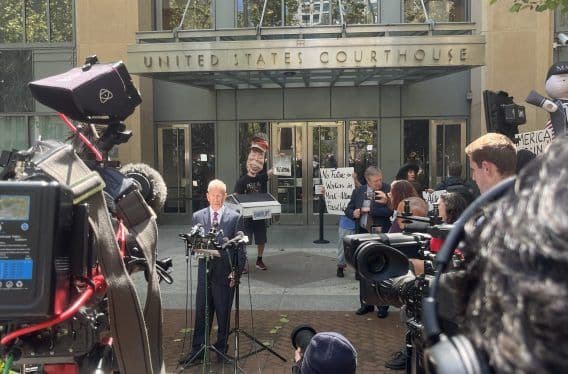
Nine California jurors are now deliberating over the future of OpenAI, the world-leading artificial intelligence lab. While the trial exploring Elon Musk’s case against OpenAI’s other cofounders and Microsoft has covered territory ranging fromthe breakupof the founders in 2018 to Altman’sfiring and rehiringin 2023, the jurors will be considering a set of fairly narrow questions. OpenAI has also made three arguments in its defense that the jury will weigh: If Musk wins out, it could mean the end of OpenAI as a for-profit company, but it’s not entirely clear what will result. Next week, the judge will begin a set of new hearings where lawyers from both sides will debate what the consequences of a verdict in favor of the plaintiffs might be. That process could be rendered moot by a negative verdict, however. Musk’s attorneys say the defendants clearly understood that Musk wanted to support a non-profit that would ensure the benefits of AI to the world, and prevent it from being controlled by any one organization. In particular, they say a $10 billion investment from Microsoft in 2023 into OpenAI’s for-profit affiliate—the first to happen after the statute of limitations—was the event that turned Musk’s concern into conviction. That deal, Musk’s lawyers say, was different from previous investments and led to OpenAI’s investors being enriched by the company’s commercial products, at the expense of the charitable mission of AI safety that Musk promoted. OpenAI’s attorneys have asked every witness to describe specific restrictions put on Musk’s donations, and none have, including his financial adviser Jared Birchall, his chief of staff Sam Teller, or his special adviser Shivon Zilis. They say everyone involved agreed that private fundraising would be required to achieve its goals, and note that Musk himself attempted to launch an OpenAI-affiliated for-profit he would personally control, and later to merge OpenAI into his company Tesla. They also note the organization’s other donors haven’t said their charitable trust was violated. Importantly, a forensic accountant hired by OpenAI testified that all of Musk's donations had been used by OpenAI well before the key date of August 5, 2021. That is evidence that Musk's donations were already used for their purpose well before he brought his lawsuit, invalidating any charitable trust that may have existed. Mainly, they insist that the for-profit affiliate that conducts most of OpenAI's actual activity continues to fulfill the organization's mission, and has generated nearly $200 billion in equity value to support the non-profit foundation. Notably, Sam Altman argued that providing ChatGPT for free helps fulfill the mission of sharing the benefits of AI with the world. The plaintiffs point to the multibillion-dollar valuations of stakes held by OpenAI founders like Brockman and Ilya Sutskever, as well as Microsoft itself, as a sign that Musk's donations were ultimately used for personal benefit, as opposed to supporting the mission of the charity. They argue that the work at OpenAI's for-profit was commercially focused, while the foundation itself was left essentially dormant, without full-time employees, and, ultimately, not even in control of the for-profit. OpenAI says all of Musk's contributions were used by the foundation by 2020, and that equity distributions came well after he left the organization in 2018. Even beforehand, evidence shows the key players agreed that being able to compensate researchers with stock was key to developing AGI, the hypothetical form of AI capable of performing any intellectual task a human can. OpenAI executives maintain that the for-profit's work meaningfully advanced the foundation's mission, including safety activities. They say the non-profit board continues to control the for-profit, and instituted new governance controls following "the blip," when Altman was fired by OpenAI's non-profit board in 2023 for lack of candor and then rehired just days later. Musk's case focused on the events of the blip, when Microsoft CEO Satya Nadella, whose company depended on OpenAI's tech, was personally involved with helping to bring Altman back and creating a new board to govern OpenAI. They note that Microsoft executives wondered if their commercial agreement might conflict with the non-profit's goals, and suggest that Microsoft's commercial priorities led OpenAI away from its mission. They've focused attention on a clause in Microsoft's agreement with OpenAI that gave Microsoft veto rights over major corporate decisions at OpenAI. Microsoft's witnesses have insisted that the company's executives didn't know of any specific conditions on Musk's donations despite extensive due diligence, and never vetoed any decision by OpenAI. They note that the company's investments and compute power allowed OpenAI to achieve its biggest triumphs. Musk has suggested that his skepticism of his cofounders grew over time, until in the fall of 2022 he finally decided they had betrayed him when he found out about Microsoft's plans for a new $10 billion investment that took place in 2023. He wouldn't file his lawsuit until mid-2024. OpenAI's attorneys argue that the terms of that deal were spelled out in a term sheet for a previous fundraising round in 2018, which Musk received and his advisers reviewed, but Musk said he didn't read in detail. They also note numerous blog posts and other communications from over the years that show Musk could have known what OpenAI was doing well before he brought them to court, including tweets where Musk criticized the company years before the suit. Zilis, Musk's adviser, even voted to approve these transactions as a member of the OpenAI board. Ultimately, the OpenAI attorneys emphasize that Musk's formal role in the organization ended in 2018 and his last donations took place in 2020. OpenAI's attorneys say the real reason that Musk filed his suit was he realized that he was wrong about OpenAI, after its launch of ChatGPT revolutionized the business of artificial intelligence. They argue that OpenAI has operated under its current structure since its first Microsoft investment in 2018, and that forcing the organization to restructure eight years later is unreasonable. There is evidence that Musk was planning his own competing AI efforts while he was still the chair of OpenAI, and hired OpenAI employees to work on AI at Tesla. OpenAI's attorneys argue that these efforts undermined OpenAI at a time when it was using Musk's donations to pursue its mission. They noted that Zilis, the mother of three of Musk's children, didn't disclose her personal relationship to other OpenAI board members for years. And they argue that Musk withheld his donations in 2017 in an effort to win control of a planned for-profit affiliate of OpenAI. Finally, "Mr. Musk abandoned OpenAI for dead in 2018," Bill Savitt, OpenAI's lead attorney, told the jury.
View
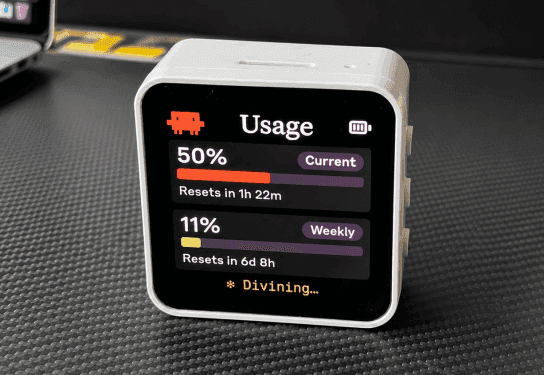
Clawdmeter turns your Claude Code usage stats into a tiny desktop dashboard
Silicon Valley’stokenmaxxingera now has its own hardware. A new open source project brings your Claude Code utilization stats into a tiny desktop dashboard, allowing AI power users to keep an eye on their usage. Sure, you can track Claude Code usage directly in the terminal using commands or otherexternal toolsandapps, but that’s not as fun as seeing a pixel-art version of the Clawd sprite dance on a screen before showing at-a-glance token usage info, is it? The “Clawdmeter,” as the device is called, is both a fun side project for AI power users and a timely indication of how thoroughly Anthropic’s Claude has infiltrated the developer community and the growing interest in tokenmaxxing. This new “productivity” trend sees software engineers at various tech companies maximizing the number of AI tokens consumed at work as a measure of how much they’ve embraced AI. As one Reddit userjokedwhen seeing theprojectfor the first time: “At this point, Anthropic should just mail these to us for free.” Another suggested adding a button to increase capacity or top up more tokens using your card on file. (Ha, that could be dangerous!) Someone made a small hardware device for the desk that monitors Claude token usage.Calls it Clawdmeter. Kinda genius.pic.twitter.com/COD4EmmsTy The idea for the project comes from Reykjavik, Iceland-based software developerHermann Haraldsson, who says he had always wanted to play around with embedded devices, but never before had the time. “I’m not an embedded developer or anything like that,” Haraldsson told TechCrunch in a call. But Claude was able to walk him through the project in just a few days, he said. “It’s really democratized access to programming, so that anyone can now do what developers used to do. I think that’s really positive, actually.” Most of the time he spent building the device was focused on design, making sure to get the font, colors, and little animations just right. To build your own dashboard, you can use a small lithium-ion battery-powereddisplaylike theWaveshare ESP32-S3-Touch-AMOLED-2.16, which pairs with your laptop over Bluetooth. When the device is turned on, the splash screen playspixel-art Clawd animationsthat get busier as your usage rate climbs. You can also push the middle button to cycle through different types of animations if you choose. “I like it when I’m working, and I see it going crazy — it’s like a little dopamine loop,” notes Haraldsson. The animation remains on the screen until you press the middle button, which then displays your session and weekly Claude utilization data in simple charts. You can press this button again to cycle to the Bluetooth screen, which displays the connection status and offers a reset feature. From there, you can tap the screen to return to the original splash screen animation. Meanwhile, two other side buttons send Space and Shift+Tab over Bluetooth for Claude Code’s voice mode and mode-toggle shortcuts. The latter lets you move between the default Normal mode, “Accept Edits” mode, Plan Mode, and Auto Mode. Haraldsson says the device keeps up with your usage limits because it reads your Claude Code OAuth token to make an API call, which then pulls the usage numbers from the response headers directly. Because Clawdmeter is an open source project, anyone can fork it to add their own features, animations,screens, and more, based on their particular interests and needs. Haraldsson says he was surprised to see that over 800 people have starred it on GitHub since its May 10 launch, and 50 have already forked the project for their own development. He suspects the device appeals to them because it has a nostalgic feel. “There’s a kind of nostalgia for when you used to have a hardware device for everything — like a Walkman to play music, or an iPod,” says Haraldsson. (Or, as one Redditorput it, the Clawdmeter is like a “hardware Tamagotchi for my context window.”) “I know it’s not replacing anything — like, you could have this on your computer — but it’s just fun,” Haraldsson says.
View
OpenAI is reportedly preparing legal action against Apple; it wouldn’t be the first partner to feel burned
OpenAI is so frustrated with Apple over a ChatGPT integration that failed to deliver the subscribers and prominence it expected that the company is now actively exploring legal action against the iPhone maker,Bloomberg News reported Thursday, citing people familiar with the matter. According to Bloomberg, OpenAI has enlisted an outside law firm to work through its options, which could include sending Apple a formal breach-of-contract notice without necessarily escalating to a full lawsuit (at least not immediately). Any legal move would likely wait until after the conclusion of OpenAI’s ongoing trial with Elon Musk. Still, it’s a reminder of what a difficult partner Apple can be for major software companies. The iPhone is an enormously attractive platform for growth, but it’s fully under Apple’s control — and companies that build there are only guests. From Google to Adobe, there’s a long history of Apple showing guests the door when they seem as if they’re getting too comfortable. TechCrunch has reached out to both OpenAI and Apple for comment. The OpenAI partnership, announced at Apple’s Worldwide Developers Conference in June 2024, wove ChatGPT into Apple’s operating systems as an option within Siri and as part of the iPhone’s Visual Intelligence feature (allowing users to use their camera to analyze their surrounds and send photos to ChatGPT with related questions). OpenAI, along with industry watchers, expected the deal might eventually funnel billions of dollars in new subscriptions its way and give the company prime real estate across one of the world’s most-used mobile ecosystems. Instead, Bloomberg reports, OpenAI has grown increasingly aggravated, complaining that the integration has been buried, its features hard to find, and that revenue from the tie-up is nowhere close to projections. “They basically said, ‘OpenAI needs to take a leap of faith and trust us,’” one OpenAI executive told Bloomberg. “It didn’t work out well.” Apple, for its part, has its own grievances, including concerns about OpenAI’s privacy standards and, according to Bloomberg, irritation over OpenAI’s push into hardware, an effort led by former Apple executives including ex-design chief Jony Ive. Either way, OpenAI is hardly the first partner of Apple to regret hitching its wagon to the company. Apple has a long history of embracing partners and then alienating them. The most famous case is Google Maps, which was a flagship feature of the original iPhone. It was so central to the device's appeal that its removal in 2012 — replaced by Apple's markedly inferior Apple Maps product — became one of the biggest tech fiascos of the decade, prompting a rare public apology from CEO Tim Cook. The friction between the two companies had been building for years at that point, thanks to the rollout of Google's Android phone a year after the iPhone's 2007 debut; after Google's then-CEO Eric Schmidt stepped down from Apple's board in 2009, that rivalry only intensified. Adobe has some scar tissue, too. Steve Jobsrefused to support Flashon the iPhone and iPad, publishing a famousopen letterin 2010 explaining why and effectively dooming the technology. Flash never recovered its footing on mobile. Then there's Spotify, whichspent yearsarguing that Apple leveraged its control over the App Store to disadvantage rival music streaming services after launching Apple Music in 2015. The European Commission agreed, fining Apple nearly€1.8 billionin March 2024. Sometimes these rifts can be overcome in the name of commercial interests. Google is now Apple's AI infrastructure partner, having struck amultiyear dealin January to power the next generation of Apple Intelligence with Gemini models. Apple is paying Google roughly $1 billion a year. In the meantime, OpenAI has had its own share of strained relationships lately. Elon Musk'slawsuitagainst the company — which accuses OpenAI ofabandoningits nonprofit founding mission and operating inbad faith— is currently at trial. The company has also reportedly navigated tensions with Microsoft, its biggest backer and infrastructure partner, as it pushes for greater independence ahead of its own IPO ambitions.
View