Latest AI News
OpenAI launches ChatGPT for personal finance, will let you connect bank accounts
On Friday, OpenAI launched a new set of personal finance tools in preview for ChatGPT Pro subscribers in the U.S., letting them connect their accounts and ask questions ranging from spending analysis to future financial planning. OpenAI has partnered with the financial connection service Plaid to manage the account connections. Users can connect to over 12,000 financial institutions, including Schwab, Fidelity, Chase, Robinhood, American Express, and Capital One. Once users connect these accounts, they will see a dashboard of their portfolio performance, spending, subscriptions, and upcoming payments. The new product comes just one month after OpenAIacquired the team behind personal finance startup Hiro, which was backed by firms like Ribbit, General Catalyst, and Restive, in April. OpenAI said that the Hiro team’s expertise in finance was useful in launching this product but didn’t specify if the entire feature was built by them. OpenAI users can access the tool by selecting “Get started” in the “Finances” option in the sidebar, or typing “@Finances, connect my accounts” in a ChatGPT conversation. Once users do that, the chatbot will guide them about linking accounts through Plaid. The company said it plans to support Intuit soon, which would enable analysis such as the impact of a stock sale on taxes or the odds of a credit card approval. According to OpenAI, more than 200 million users already ask financial questions to ChatGPT every month. The company also noted that the new GPT-5.5 model is stronger at reasoning with context, which is crucial for answering finance-related questions. The company said it worked with finance experts to create a benchmark for the model to improve on personal finance questions. With the new financial tool integration, users can get detailed answers to questions such as “I feel like I’ve been spending more recently. Has anything changed?” or “Help me build a plan to be ready to buy a house in my area in the next 5 years.” Users can go to Settings > Apps > Finances to remove connections to certain accounts if they want. Once they disconnect a service, the synced data will be removed from ChatGPT in 30 days. What’s more, users can also view and delete financial memories from the Finances page. Generalized chatbots are designed to answer anything, leading people to ask questions about data-sensitive topics such as health, finance, and personal life. AI companies are realizing this and making specialized products for these sectors. BothOpenAI and Anthropichave launched health-related tools. Earlier this month, Perplexity launched its ownfinancial research product based on its Computer agent. OpenAI said its personal finance tools will be available on ChatGPT on the web and on iOS for Pro users. It noted that, based on the feedback from these users, it wants to improve the product before making it available to Plus users.
View
Rajasthan Enters Semiconductor Race With First Chip Packaging Plant in Bhiwadi
the facility currently has an annual packaging capacity of 60 million semiconductor units
View

Telangana's Life Sciences Hub Hits $145 Bn, Draws ₹84,000 Cr in 2 Years
Hyderabad now hosts technology and innovation centres of nine of the world’s 10 ten life sciences companies.
View

Anthropic Reverses Decision on Third-Party Agentic Tools, Allows OpenClaw Usage in Claude Plans
The artificial intelligence (AI) space has started moving away from an “unlimited free buffet” pricing model for programmatic and agentic automation. After Microsoft announced that GitHub Copilot will move to a metered credit allotment calculated on token consumption instead of premium requests, Anthropic is moving towards a similar model. The company said that a monthly fixed credit will now be provided for programmatic use. However, the upside to the change is that it now reverses the AI startup's older decision not to allow third-party agentic tool usage via Claude plans.
View
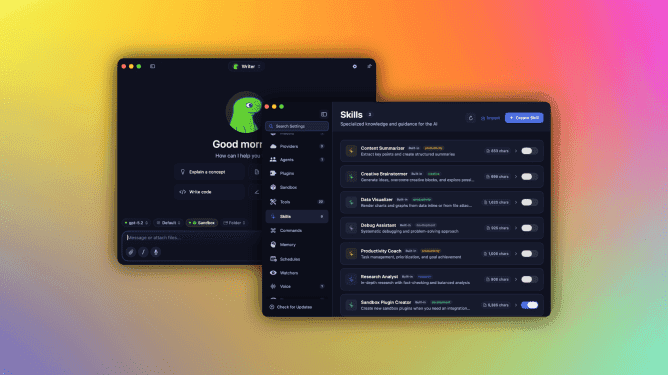
Osaurus brings both local and cloud AI models to your Mac
As AI models increasingly become commoditized, startups are racing to build the software layer that sits on top of them. One interesting entrant into this space isOsaurus, an open source, Apple-only LLM server that lets users move between different local AI models, either locally or in the cloud, while keeping their files and tools all on their own hardware. Osaurus evolved out of the idea for adesktop AI companion, Dinoki, which Osaurus co-founderTerence Paedescribed as a sort of “AI-powered Clippy.” Dinoki’s customers had asked him why they should buy the app if they still had to pay for tokens — the usage units AI companies charge for processing prompts and generating responses. That got Pae thinking more deeply about running AI locally. “That’s how Osaurus started,” Pae, previously a software engineer at Tesla and Netflix, told TechCrunch over a call. The idea, he explained, was to try to run an AI assistant locally. “You can do pretty much everything on your Mac locally, like browsing your files, accessing your browser, accessing your system configurations. I figured this would be a great way to position Osaurus as a personal AI for individuals.” Pae began building the tool in public asan open-source project, adding features and fixing bugs along the way. Today,Osauruscan flexibly connect with locally hosted AI models or cloud providers like OpenAI and Anthropic. Users can freely choose which AI models they’re using, and keep other aspects of the AI experience on their own hardware, like the models’ own memory, or their files and tools. Given that different AI models have different strengths, the advantage of this system is that users can switch to the AI model that best fits their needs. Such a structure makes Osaurus what’s called a “harness” — a control layer that connects different AI models, tools, and workflows through a single interface, similar to tools likeOpenClaworHermes. However, the difference is that such tools are often aimed at developers who know their way around a terminal. And sometimes, like in the case of OpenClaw, they may pose security issues and holes to worry about. Osaurus, meanwhile, presents an easy-to-use interface that consumers can use, and addresses security concerns by running things in a hardware-isolated, virtual sandbox. This limits the AI to a certain scope, keeping your computer and data safe. Of course, the practice of running AI models on your machine is still in its early days, given that it’s heavily resource-intensive and hardware-dependent. To run local models, your system will need at least 64 GB of RAM. For running larger models, like DeepSeek v4, Pae recommends systems with about 128 GB of RAM. But Pae believes local AI’s needs will come down in time. “I can see the potential of it, because the intelligence per wattage — which is like the metric for local AI — has been going up significantly. It’s on its own curve of innovation. Last year, local AI could barely finish sentences, but today it can actually run tools, write code, access your browser, and order stuff from Amazon […] it’s just getting better and better,” he said. Osaurus today can run MiniMax M2.5, Gemma 4, Qwen3.6, GPT-OSS, Llama, DeepSeek V4, and other models. It also supports Apple’s on-device foundation models, Liquid AI’s LFM family of on-device models, and in the cloud, it can connect to OpenAI, Anthropic, Gemini, xAI/Grok, Venice AI, OpenRouter, Ollama, and LM Studio. As a full MCP (Model Context Protocol) server, you can give any MCP-compatible client access to your tools as well. Plus, it ships with over 20 native plugins for Mail, Calendar, Vision, macOS Use, XLSX, PPTX, Browser, Music, Git, Filesystem, Search, Fetch, and more. More recently, Osaurus was updated to include voice capabilities as well. Since the project went live nearly a year ago, it has been downloaded north of 112,000 times, according to itswebsite. Currently, Osaurus’ founders (who include co-founder Sam Yoo) are participating in the New York-based startup accelerator Alliance. They’re also thinking about next steps, which could see Osaurus being offered to businesses, like those in the legal space or in healthcare, where running local LLMs could address privacy concerns. As the power of local AI models grows, the team believes it could lower the demand for AI data centers. “We’re seeing this explosive growth in the AI space where [cloud AI providers] have to scale up using data centers and infrastructure, but we feel like people haven’t really seen the value of the local AI yet,” Pae said. “Instead of relying on the cloud, they can actually deploy a Mac Studio on-prem, and it should use substantially less power. You still have the capabilities of the cloud, but you will not be dependent on a data center to be able to run that AI,” he added.
View

HCLTech, Red Hat Partner to Roll Out Enterprise AI Infrastructure Solutions
The collaboration will strengthen HCLTech’s AI Factory ecosystem as enterprises increasingly move from AI experimentation to large-scale deployment.
View

HCLTech Leads $300 Million Funding for Sarvam AI, Elevating Valuation to $1.5 Billion: Report
In addition to HCLTech’s $150 million, Sarvam will receive $50 million from Bessemer Venture Partners and another $100 million from a consortium of investors, including NVIDIA.
View

Beyond Copilots: Enterprise AI Enters the Era of Self-Healing IT
As Kyndryl deploys agentic AI to predict and prevent outages, enterprises confront a bigger challenge: trusting AI to run mission-critical operations autonomously.
View

Karnataka, Chile Explore Deeptech, Startup Partnerships in Bengaluru
The engagement builds on the Letter of Intent signed between Karnataka and Chile during the Bengaluru Tech Summit.
View
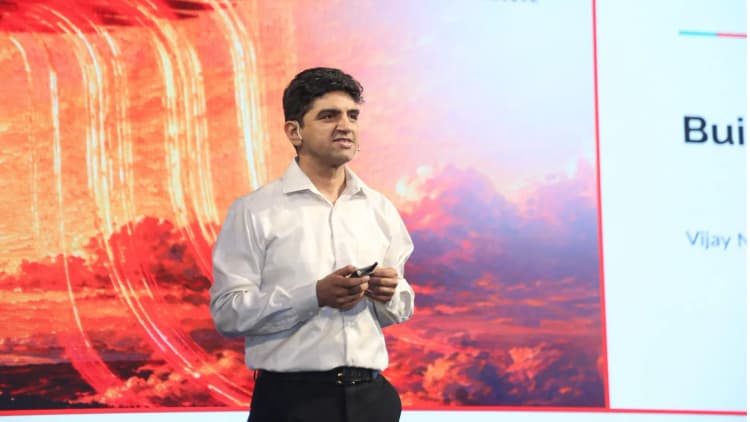
Enterprise AI Has a Prototype Problem
The path to enterprise-grade AI is ultimately less about impressive demos and more about discipline, governance, reliability, and operational maturity.
View

Why Floating Data Centres Are Becoming the Next Infrastructure Bet
As AI's appetite for power and space grows insatiable, a new generation of engineers is moving the server room offshore.
View

TSMC Forecasts AI Adoption Could Help Global Semiconductor Market Reach $1.5 Trillion Milestone by 2030
AI is now an important part of many people's lives, with AI agents capable of drafting emails, planning trips, editing images, generating videos, researching topics, and vibe coding apps. While AI is seemingly making users' lives easier, reports suggest that it has also created a shortage of memory and storage components for laptops and smartphones, forcing OEMs to raise prices of devices. AI's global market size has also seen exponential growth, with companies investing heavily in building data centres.
View