Latest AI News
The Dark Horses of Tokenmaxxing Era Threaten an Inference Price War
Chinese AI models have priced their APIs 5–10x lower than those of Anthropic and OpenAI. But is that sustainable?
View

A satellite just learned to find things on its own — here’s what that means
For the first time, an Earth observation satellite has found what it was looking for — on its own, without human analysts on the ground. The milestone, which occurred in April, marks the first reported use of a vision-language model in orbit, and offers a glimpse of how AI could fundamentally change what space-based sensors are capable of — and how much they’re worth. Typically, satellites download large chunks of data to analysts on the Earth below, who use machine learning algorithms or their own eyes to figure out what’s going on. But onboard Yam-9, a spacecraft built by space infrastructure companyLoft Orbital, a software package built by NASA’s Jet Propulsion Laboratory identified areas of interest in response to natural language queries. Google DeepMind’s Gemma 3 — the vision-language model, or VLM, that powered the demonstration — is purpose-built for edge applications, meaning it is designed to run on limited hardware far from a data center. VLMs combine the contextual understanding of large language models with the ability to analyze imagery: researchers asked the model to classify sensor data where natural environment meets human development, for example, or to identify infrastructure around railway hubs — and it did. The demonstration is significant for two reasons. In the near term, it could make space sensors far more useful by doing initial data triage on orbit, reducing the flood of raw data that analysts currently have to wade through. Longer term, it’s a proof point toward running larger-scale AI infrastructure in space. “It opens the door to always-on, patrol layers in space,” Loft’s head of AI, Paul Lasserre, told TechCrunch. “If you have a VLM, you can have logic—like ‘monitor this border for me, and let me know when something is suspicious,’ and interact back and forth with the satellites.” Loft’s spacecraft are designed as platforms for third-party customers. The business model is closer to infrastructure-as-a-service than traditional satellite manufacturing. One recent deal saw it build, launch and operate six new satellites for EarthDaily, which will analyze and market the data collected onboard the spacecraft. Yam-9 was launched in the fall of 2025 as a pathfinder for the company’s orbital AI projects, and includes a Nvidia Jetson Orrin AGX GPU, one of the leading chips used in space compute. Juan Delfa Victoria, a technical leader in NASA JPL’s AI group, led the development of NAVI-Orbital, a software package that was effectively the harness for the Gemma 3 VLM. While Gemma 3 is off the shelf, software engineers had to streamline the software package to reduce the amount of libraries and memory it would require. While this is the first reported use of a VLM on orbit, we can expect other companies to follow suit. Planet Labs flies satellites with Jetson Orin processors; for now, it is using them for simpler object detection tasks, but a spokesperson says research is underway on other AI applications, including VLMs. Kepler Communications, which operatesthe largest group of GPUSin space, declined to say whether it had deployed VLMs in space due to NDA agreements with partners, but noted that there have been “several undisclosed use cases of our compute environment” since those spacecraft launched in January. “Now that we’ve proven the concept, that’s really the direction of travel,” Lasserre said. The goal is to build out the constellation to ensure real-time coverage of anywhere on Earth, which which he says would take somewhere between 50 and 100 satellites like Yam-9. (Loft currently operates 12 spacecraft on orbit.) Lessons learned deploying these smaller models on orbit will inform how companies attempt to deploy larger-scale compute infrastructure in space, particularly in the prosaic-but-vital areas of power and memory management. They could also pave the way for new scientific tools. The idea for NAVI-Space began with JPL Researcher Taran Cyriac John, who was thinking about digital assistants for astronauts exploring the Moon or Mars. “We’re thinking, okay, you have astronauts with pressurized suits, and you know they cannot be tapping on a keyboard, whatever they want to do is complex.” Delfa Victoria said. “So, how about we provide an assistant, like in video games and in movies, where you see an AI which is interactive?” Just don’t call it HAL 9000.
View

As AI agents become employees, NewCore emerges with $66M to give them identities
Cybersecurity startupNewCoreemerged from stealth with $66 million in funding on Monday, aiming to solve a challenge it believes many companies will soon face as they deploy AI agents: how to authenticate, govern, and control them at scale. The seed round was led by cybersecurity-focused venture firm Cyberstarts, with participation from Index Ventures and Evolution Equity Partners, valuing NewCore at $300 million after investment. Companies are increasingly treating AI agents as workplace participants rather than software tools. Goldman Sachs last yeartested AI coding agent Devin as a new employee, while McKinsey said earlier this year that25,000 AI agents already workalongside its 60,000 employees. NewCore is betting companies will eventually need to manage those digital workers much like human employees. For co-founder and chief executive Zohar Alon (pictured above, center), the opportunity stems from a belief that identity systems have become one of the weakest links in enterprise security. Alon, who previously founded cloud-security startupDome9before itsacquisition by Check Point, said the rise of AI agents convinced him and his co-founders that existing identity platforms were ill-suited for a future in which software workers operate alongside human employees. “We know for sure that the scale and the complexity that those things [AI agents] are going to add to 15- or 20-year-old identity platforms are going to break them,” he told TechCrunch. Alon co-founded NewCore with chief technology officer Amihai Neiderman (pictured above, right), a former Unit 8200 research leader and founder of healthcare AI startup Nym Health, and Chief commercial officer Erez Yarkoni (pictured above, left), who previously served as CIO of T-Mobile USA and Telstra. NewCore’s platform is designed to manage both human and AI-agent identities in a single system. The startup says AI agents should be treated as first-class identities with their own permissions, lifecycle controls, and revocation mechanisms, rather than as traditional service accounts or machine credentials. The idea for NewCore, Alon said, began taking shape in 2023 while helping review the technology budget of a company that relied on an established identity provider. After seeing the size of the bill, he assumed the customer must be satisfied with the product. “I said, ‘You must be extremely happy with them,’” Alon recalled. “He said, ‘No, I’m not.’” The exchange reinforced Alon’s belief that identity had become a large but stagnant market dominated by vendors facing limited competitive pressure. Established identity providers including Okta and Microsoft’s Entra have begun adding capabilities for AI agents. However, Alon argues those efforts extend platforms originally designed for human employees, whereas NewCore was built from the ground up for a workforce made up of humans, machines, and AI agents. “The traditional vendors give you an agentic way to deal with identity, but it’s on the side — it’s not integrated,” Alon said. As one example, NewCore uses what it calls a “split-key” architecture that divides critical identity credentials between the customer and the platform, an approach designed to eliminate a single point of compromise. NewCore also offers an “Agentic Skill” integration package for coding assistants such as Anthropic’s Claude Code, OpenAI’s Codex and Cursor that allows those AI tools to access enterprise systems as managed identities rather than through manually distributed credentials. Employees can also use NewCore’s mobile app to grant, review and revoke access for AI agents, providing what Alon described as a human oversight layer as companies deploy more autonomous systems. The startup has grown to more than 50 employees across the U.S. and Israel. Alon said the platform is being used by fewer than 10 customers and more than 10 design partners. The startup expects to begin charging customers this summer, he added. Alon predicts AI agents could outnumber human employees at many technology-focused organizations within a few years, a view recently echoed by TCS Chairman N. Chandrasekaran, who hassaidAI agents could eventually rival the Indian IT services company’s workforce in size. Identity, Alon said, is likely to become one of the first enterprise systems strained by large-scale deployment of AI agents, arguing that companies will eventually need new ways to monitor, authorize, and revoke software workers operating across their networks. “It’s inevitable,” Alon said of AI agents becoming a significant part of the workforce. “The question is whether we’re going to build the guardrails in time.”
View

Sarvam becomes India’s newest AI unicorn with $234 million funding round led by HCLTech
Sarvamhas raised $234 million at a $1.5 billion valuation, the company announced on Monday. The Bengaluru-based company is now India’s newest AI unicorn, as governments and companies seek greater control over critical artificial intelligence technologies and computing infrastructure. $150 million of that money will come from HCLTech, the IT subsidiary of Indian conglomerate HCL Group and lead strategic investor in the round. Bessemer Venture Partners also participated alongside existing backers Khosla Ventures and Peak XV Partners. Sarvam hopes to raise a total of $300 million for its Series B round. The investment comes more than two years after Sarvamraised $41 millionacross its seed and Series A rounds, and follows the startup’s launch of itsopen-source modelsin 30-billion- and 105-billion-parameters earlier this year. The new funding also reflects a broader push by countries and companies to develop sovereign AI capabilities amid growing concerns over access to advanced models and the computing infrastructure that powers them. Sarvam is among a handful of startups attempting to build a full-stack AI business, spanning model development, inference infrastructure, and enterprise applications. The startup says its models are designed for Indian languages and use cases, while its products are being deployed across sectors including banking, insurance, government services, and defense. HCLTech’s investment gives Sarvam a deep-pocketed strategic partner as it seeks to commercialize its technology. The plan is to combine Sarvam’s AI models with HCLTech’s enterprise relationships, engineering workforce, and software assets to build AI products for businesses and governments. Sarvam’s investment comes as India cements its position as one of the world’s most important AI markets. Both OpenAI and Anthropic have described India as their second-largest market after the U.S., driven by the country’s vast base of developers, enterprises, and consumers adopting AI tools. Despite its scale as an AI consumer, India has produced few serious contenders in the race to develop frontier AI models. High computing costs and limited access to capital have made it difficult for Indian startups to compete with well-funded rivals in the U.S. and China, leaving Sarvam among a small group of companies attempting to build homegrown foundation models. The debate over AI sovereigntygained fresh urgencylast week when Anthropicdisabled access to its latest models, Fable 5 and Mythos 5, after the U.S. government ordered the company to suspend their use by any foreign national, citing national security concerns. The move highlighted how access to cutting-edge AI systems remains concentrated among a small number of overseas providers. With the fresh investment, Sarvam said it would fund research into its next-generation AI models focused on agentic, coding, and cybersecurity applications, while also expanding access to computing infrastructure as it scales deployments across industries. Sarvam said its conversational AI platform now handles more than 2 million interactions a day, while its inference platform processes roughly 10 million API calls daily. Its speech models transcribe more than 500,000 hours of audio each month, and its document AI systems are being used to digitize more than 35 million pages of records. Those tools are increasingly being deployed at scale. The company said its multilingual voice agents have collected data from 17 million farmers for India’s Ministry of Agriculture and Farmers Welfare. Additionally, a nationwide voice campaign for a leading insurer helped support policy renewals for 45 million policyholders. Beyond government and consumer-facing applications, Sarvam said a large fintech company is using its agentic AI platform to support a sales force of more than 350,000 people. The startup was founded by Vivek Raghavan and Pratyush Kumar, who previously worked at AI4Bharat, an Indian-language AI research initiative at the Indian Institute of Technology Madras backed by technology veteran Nandan Nilekani. “Our ambition is to diffuse this technology widely in India, creating significant value across sectors for citizens, small businesses, enterprises, and state and central governments,” Raghavan said. “We are positioned to both help them adopt and innovate on AI.”
View

Why This Bengaluru Startup Refuses to Sell to Anyone But Armed Forces
Zulu Defence focuses on high-speed tactical UAVs and has committed to indigenous development.
View
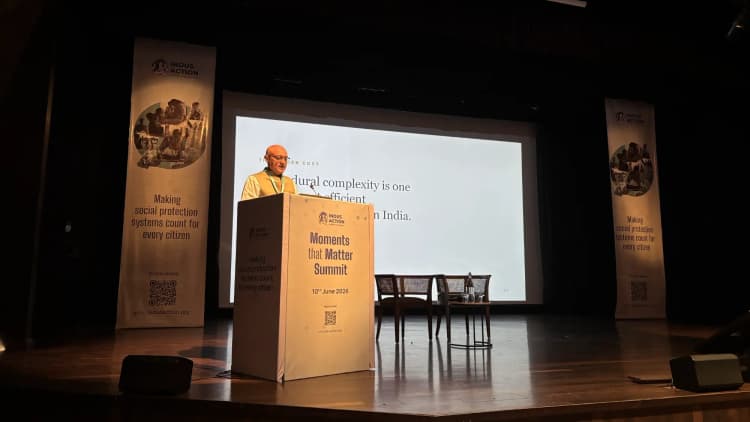
‘AI is Going To Worsen the Divide Between Haves & Have-Nots,’ Says Aadhar’s Founding CTO
Srikanth Nadhamuni argues that AI can dismantle India's procedural complexity, but only if it is built the way Aadhaar was: for everyone.
View
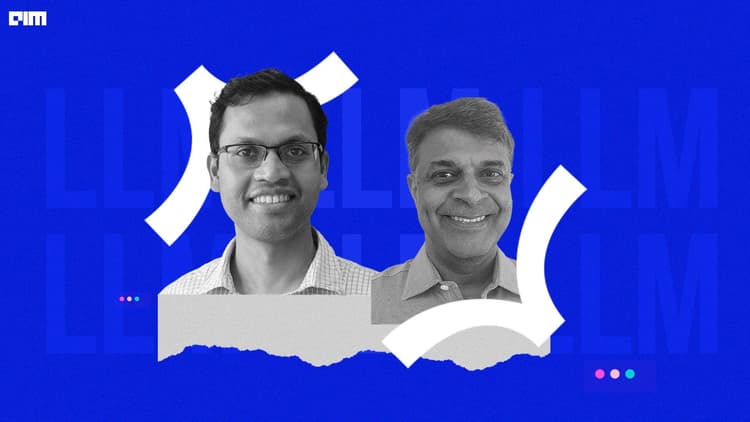
Sarvam AI Raises $234 Mn in HCLTech-Led Series B Round at $1.5 Bn Valuation
HCLTech also acquired a 10.46% stake in the company through an all-cash minority investment.
View

Adani Group, Jabil Partner to Build AI Data Centre Hardware Platform in India
The companies intend to build multi-gigawatt AI rack manufacturing capacity in India to serve hyperscalers, colocation operators and enterprise data centre customers.
View

The AI layoff wave is becoming a powder keg
Something strange is happening in tech right now. Companies are posting record profits and revenue while laying off tens of thousands of people, citing AI as the official explanation. So far this year, there have been an estimated363 layoffsat tech companies this year, affecting nearly 150,000 people — a pace of about 974 people per day, 44% faster than last year — according to TrueUp, a tech job board and recruiting platform that also runs one of the most widely cited tech layoff trackers. The trend appears to be accelerating. Tech layoffs hit theirhighest single month in two yearslast month, with nearly 40,000 cuts, and AI was the most-cited reason for layoffs across every industry for the third month running, according to outplacement firm Challenger, Grey & Christmas. There’s growing skepticism that AI is really the culprit, though — that it’s more of a convenient cover story than the actual cause. Few examples illustrate the pushback better than what happened at the payments outfit Block earlier this year. After getting hammered over laying off nearlyhalf the companyearlier this year, Jack Dorsey denied the cuts were a sign of trouble, insisting instead that AI tools “are enabling a new way of working which fundamentally changes what it means to build and run a company.” But pressed by commenters on X about the bloat he’d created during the pandemic, Dorsey later acknowledged that Block had, in fact, over-hired. Other voices have also begun to weigh in, including famed VC Marc Andreessen, who recently called AI the “silver bullet excuse” for layoffs that are really about mismanagement in some cases. Inconversationwith podcaster-investor Harry Stebbings, Andreessen said, “Essentially, every large company is overstaffed. It’s at least overstaffed by 25%. I think most large companies are overstaffed by 50%. I think a lot of them are overstaffed by 75%. Now they all have the silver bullet excuse: Ah, it’s AI.” What makes this combustible is that at the very moment that tens of thousands of workers are being shown the door, a small cohort of AI insiders is becoming wealthy on a scale that’s hard to comprehend. Early last month, AI chipmaker Cerebras Systemsclosed its first dayon the Nasdaq up68%from its $185 IPO price, giving the chipmaker a market cap of roughly $67 billion — the largest US tech IPO since Snowflake’s 2020 debut. By the close, co-founders Andrew Feldman and Sean Lie werebillionaires. (The company’s shares have since fallen 30%.) SpaceX meanwhile went public on Friday and enjoys, as of this writing, a $2.1 trillion market cap, turning Musk into a paper trillionaire and potentially minting an estimated 4,400 millionaires, and around400 centimillionairesin the process — assuming the shares don’t fall. Anthropic and OpenAI arequickly inchingtoward the public market, too, both at valuations of roughly $1 trillion or more. The effects are showing up closer to home, too. In San Francisco — now home to dozens of AI companies, including the big AI labs — high-end homes are routinely selling formillions of dollars over asking price.Then there’s Mark Zuckerberg. In early March, he purchased a$170 million mansionon Miami’s “Billionaire Bunker,” setting the all-time record for the most expensive home sale in Miami-Dade County history. Two months later, Meta announced it would lay off8,000 people, or roughly 10% of its workforce. Tech titans routinely shell out jaw-dropping sums on their real estate portfolios. But these extremes come at a moment when many Americans are getting squeezed harder than they have been in years. Consider that workers with employer-sponsored health insurance face premium increases of about6% to 7%this year, more than double the rate of inflation, the cost of private health insurance has roughly doubled since 2008, and median home prices have climbed28% since early 2020, while mortgage rates have nearly doubled. In a January 2026 New York Times/Siena poll,65% of voterssaid a middle-class lifestyle is out of reach, and a more recent poll found76% of Americansnow name cost of living as their top economic concern, up sharply from 58% a year earlier. This is about more than job losses in isolation, in short. It’s tens of thousands of laid-off workers hitting an unusually unforgiving cost environment at the same time that tens of thousands of AI insiders are seeing once-in-a-generation paper wealth materialize, and being told that AI is why they’re out of a job. Whether or not that’s the real explanation — many economists point instead to tariffs, war in the Middle East, and broader economic uncertainty as the actual drivers of corporate caution — the optics are what they are. One group is getting unfathomably rich off the advancements that are supposedly replacing the other. It isn’t hard to find a precedent for what happens when that divide gets wide enough. In 2008, a financial crisis that began with loose lending and over-the-top risk-taking on Wall Street ended with bailouts for the banks that caused it, while millions of Americans lost jobs and homes in the Great Recession that followed. Three years later, that anger crystallized into Occupy Wall Street. That movement could look quaint in comparison if the current trajectory holds. Occupy Wall Street emerged from a crisis and the public anger was, at its core, about who paid for the cleanup. This time, there’s no crash to point to. Companies are profitable, AI itself is minting a new class of overnight fortunes, and the layoffs are happening anyway, with AI cited as the driver. If the optics of 2008 were, “We’re bailing out the people who broke the economy while you lose your job,” the optics here could end up being, “We’re getting richer than ever off the very tech we’re using to replace you.” Many companies — Block, Atlassian, Cloudflare, among them — have watched their stocks surge when they point to AI as the reason for cuts, so the strategy makes sense on its face. Still, they might want to consider whether that’s really the message they want to send to the people they’re laying off, and to everyone else now watching.
View

India’s AI Boom Could Double Data Centre Water Consumption by 2030: Report
A CEEW report highlighted the environmental cost of AI growth, estimating that a single 100 MW hyperscale data centre can consume nearly 20 lakh litres of water every day.
View
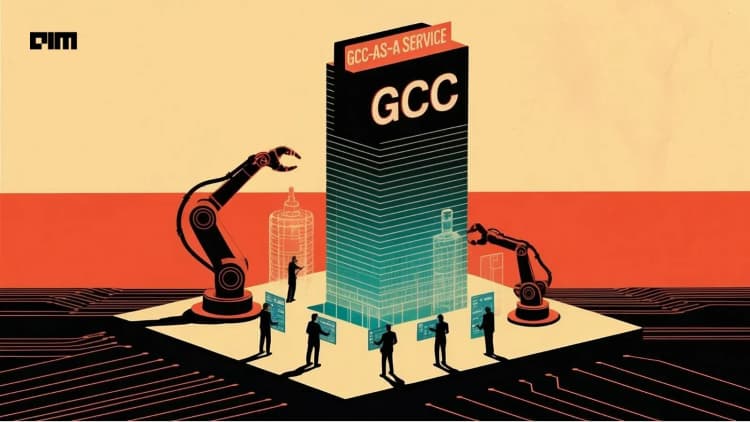
Indian IT Once Feared GCCs. Now, it is Racing to Monetise GCC-as-a-Service
GCCs are evolving into a major growth strategy as IT firms seek new revenue pools in building and running AI-native captive centres.
View

EXL Strengthens India Presence with Expanded Chennai AI Hub
The expansion reflects EXL’s broader AI strategy with nearly 60% of the company’s revenue now generated from data and AI services, according to company executives.
View