Latest AI News

Amazon Alexa+ Can Now Create AI-Powered Podcast Episodes on Demand
Amazon has introduced a new Alexa+ feature called Alexa Podcasts that can generate podcast-style audio episodes on demand. The tool creates AI-generated episodes on nearly any topic in a few minutes using synthetic host voices. Users only need to provide a topic and can adjust the planned coverage before the audio is generated. The feature is designed to help users learn about news, travel, hobbies, and professional topics in an audio format that can be played through Echo devices and the Alexa app.
View

Google Starts Rolling Out Gemini Usage Dashboard, Adds Weekly Limit
Google is now rolling out the usage dashboard for Gemini to all users. This new space, which is slowly rolling out globally, acts as a space to let users know how soon they will hit their rate limits and plan their usage accordingly. The dashboard brings more transparency to users who frequently exhaust their usage and have to wait for the bar to reset. However, as a downside, the Mountain View-based tech giant has implemented a weekly rate limit alongside its five-hour limit, which places broader restrictions on the usage one can get out of their artificial intelligence (AI) chatbot.
View
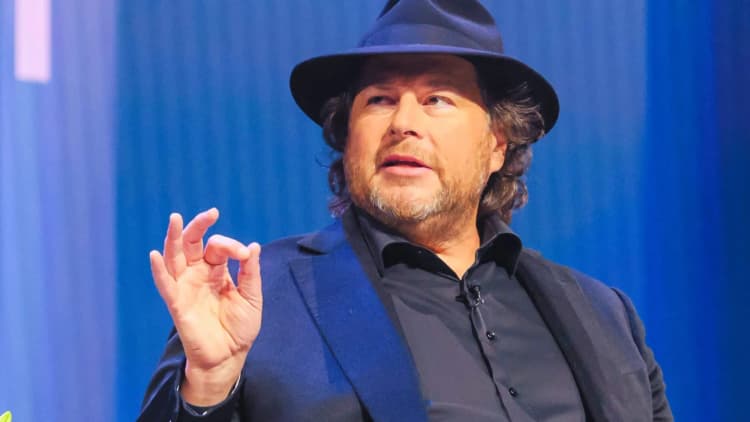
Salesforce to Spend Nearly $300 Mn on Anthropic Tokens in 2026
Salesforce currently has around 15,000 engineers, many of whom now work with AI tools such as Anthropic Claude.
View
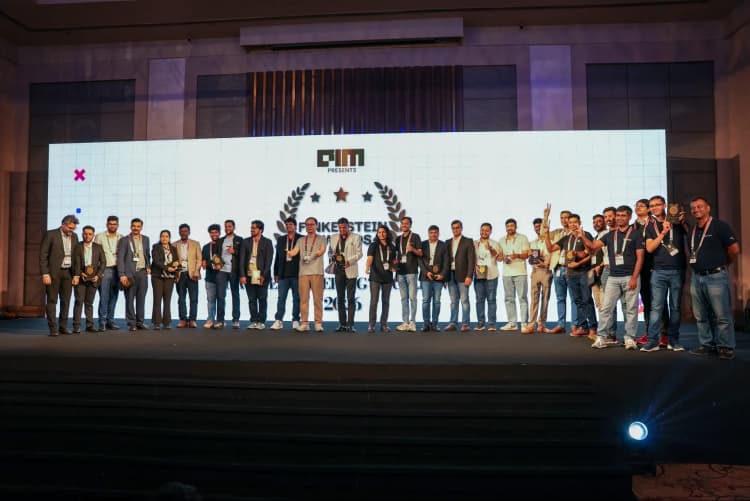
Meet the Winners of the Finkelstein Awards for Data Engineering Excellence 2026
The Finkelstein Awards for Data Engineering Excellence 2026 celebrate individuals and teams pushing the boundaries of data-driven work.
View
Blackstone, Google Launch TPU Cloud Venture With $5 Bn Commitment
The new company will offer data centre capacity, networking, operations, and access to Google Cloud’s TPUs through a compute-as-a-service model.
View
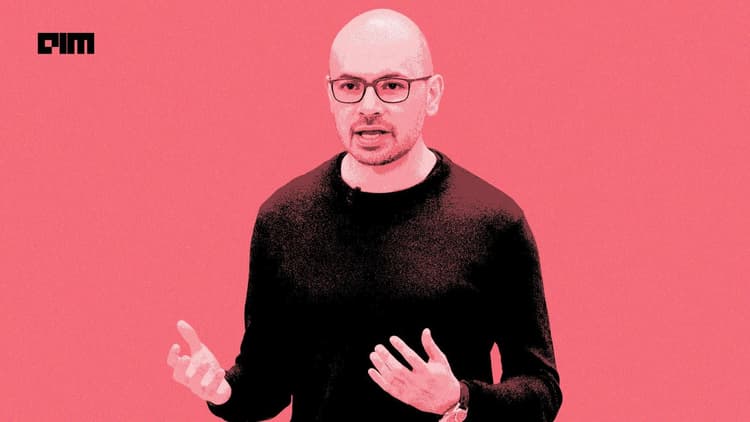
Google DeepMind’s Demis Hassabis Was Early Investor in Anthropic: Report
Anthropic CEO Dario Amodei reportedly considers Demis Hassabis a role model.
View

How One Bengaluru Road Turned Into India's Hottest Economic Cluster
What differentiates Bengaluru’s micro-markets today is the type of enterprise ecosystem they support. ORR, in particular, has evolved into one of India’s densest technology corridors.
View
Meta to Axe 10% of Workforce as It Shifts 7,000 Employees to AI Teams: Report
The changes are part of a broader overhaul at Meta as the company ramps up spending on AI infrastructure and products.
View

Google I/O 2026 Starts Today: How to Watch Keynote Live and What to Expect
Google I/O 2026 is all set to begin today (May 19), and the tech giant is expected to make several announcements about software features coming to its services over the coming months. In recent weeks, the Mountain View-based tech giant has provided us with a glimpse of what's to come, courtesy of The Android Show. The 2026 edition of the developer conference is expected to outline Google's roadmap across artificial intelligence (AI), Android, and developer tools.
View

SandboxAQ brings its drug discovery models to Claude — no PhD in computing required
Drug discovery is one of the most expensive pursuits in modern industry. Finding a single viable molecule can take a decade and cost billions, and most candidates still don’t make it. A generation of AI startups has promised to fix that — most have made the problem less painful for researchers, who are already technically sophisticated enough to use the tools. But SandboxAQ thinks the bottleneck isn’t the models. It’s the interface. The company has teamed up with Anthropic to integrate its scientific AI models directly into Claude — putting powerful drug discovery and materials science tools behind a conversational interface that requires no specialized computing infrastructure to use. Founded roughly five years ago as an Alphabet spinout, SandboxAQ counts Eric Schmidt, Google’s former CEO, as its chairman. The company, which has raisedmore than $950 million from investors, has built out a number of different business lines, includinga cybersecurity business. One of the more unique things SandboxAQ does, however, is produce large quantitative models, or LQMs. These proprietary models are “physics-grounded,” meaning they’re built on the rules of the physical world rather than patterns in text. They can run quantum chemistry calculations and simulate both molecular dynamics and microkinetics, the study of how chemical reactions unfold at the molecular level. That matters because it tells researchers how candidate molecules are likely to behave before anyone sets foot in a lab. “Trained on real-world lab data and scientific equations, LQMs are AI models engineered for the quantitative economy, a $50+ trillion sector spanning biopharma, financial services, energy, and advanced materials,” the company said in a news release that strongly suggests Sandbox AQ isn’t building another chatbot or code assistant — it’s chasing the economy that AI is supposed to transform. Chai DiscoveryandIsomorphic Labs— both well-funded bets on better models — have focused on the science. SandboxAQ is focused on who can actually use it. “For the first time, we have a frontier [quantitative] model on a frontier LLM that someone can access in natural language,” Nadia Harhen, SandboxAQ’s general manager of AI simulation, told TechCrunch. Previously, users of SandboxAQ’s LQMs would have had to provide their own digital infrastructure to run the models. SandboxAQ’s customers tend to be computational scientists, research scientists, or experimentalists. Generally, these people work at large pharmaceutical or industrial companies and are searching for new materials that can become marketable products. “Our customers come to us because they’ve tried all the other software out there, and the complexity of their problem is such that it didn’t work or didn’t yield positive results for them when that translation went to take place in the real world,” said Harhen.
View
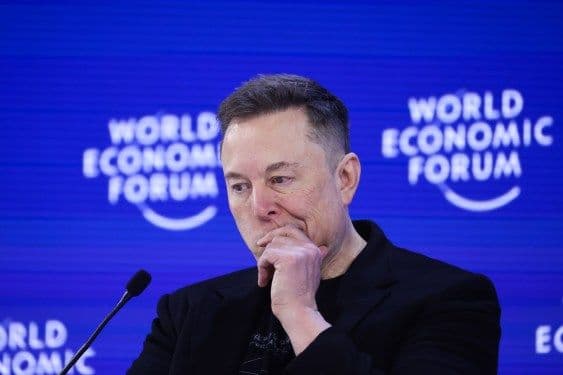
Elon Musk has lost his lawsuit against Sam Altman and OpenAI
Elon Musk’s claim that he was mistreated by his OpenAI co-founders failed after nine California jurors returned a unanimous verdict that his lawsuits had been filed too late. Musk accused Sam Altman, Greg Brockman, OpenAI, and Microsoft of “stealing a charity” by creating a for-profit affiliate of the frontier AI lab. Jurors, however, found that any harms that Musk may have suffered came before the deadline for filing his claims under the law. While the trial delved deeply into the melodramatic history of OpenAI and featured testimony from leading figures in Silicon Valley, it ultimately turned onfairly narrow questionsof the law. The trial focused on whether and when Altman and the other defendants had made and broken promises to Musk, but his case failed to convince jurors that he had a valid claim. In particular, OpenAI had advanceda statute of limitations defense, which sought to prove that any harms Musk sought to litigate had taken place before 2021. (The specific date varied by the charge: before August 5, 2021, for the first count; August 5, 2022, for the second count; and November 14, 2021, for the third count.) Ultimately, the jury found that argument persuasive, which made for a short deliberation period. “There was a substantial amount of evidence to support the jury’s finding, which is why I was prepared to dismiss on the spot,” Judge Yvonne Gonzalez Rogers said after the verdict was delivered. The end of the case means that one major threat to OpenAI — a possible restructuring — is now off the table ahead of its reported IPO. “It did not take [the jury] two hours to conclude … that Mr. Musk’s lawsuit is nothing more than an after-the-fact contrivance that bears no relationship to reality,” OpenAI’s lead attorney, Bill Savitt, said after the verdict. “They kicked it exactly where it belongs — just to the side. This lawsuit is a hypocritical attempt to sabotage a competitor.” Microsoft, which Musk sued for aiding and abetting OpenAI’s alleged breach of charitable trust, welcomed the verdict. A spokesperson for the company said it “remained committed to our work with OpenAI to advance and scale AI for people and organizations around the world.” The verdict came in the middle of a hearing to determine the potential damages to Musk if the verdict had gone the other way. While that discussion is moot for now, the judge appeared unconvinced by the analogy Musk’s lawyers drew between his charitable contributions and investments in a for-profit startup. “Your analysis seems to be devoid of connection to the underlying facts,” she told Dr. C. Paul Wazzan, the expert who came up with Musk’s estimate of OpenAI and Microsoft’s wrongful gains at his expense — some $78.8 billion to $135 billion. In a tweet after the ruling, Musk appeared to take the procedural grounds of the dismissal as a moral victory. “There is no question to anyone following the case in detail that Altman & Brockman did in fact enrich themselves by stealing a charity. The only question is WHEN they did it!” Musk wrote. “I will be filing an appeal with the Ninth Circuit, because creating a precedent to loot charities is incredibly destructive to charitable giving in America.” Reached for comment by TechCrunch, Musk’s lead counsel, Marc Toberoff, said, “One word: Appeal.”
View
Anthropic has acquired the dev tools startup used by OpenAI, Google, and Cloudflare
Anthropic announced Monday it has acquired Stainless, a startup founded by former Stripe engineer Alex Rattray whose software is widely used by rival AI labs, including OpenAI and Google. Anthropic didn’t disclose terms of the deal. However, The Informationreportedlast week that the company was in talks to acquire Stainless, which is backed by Sequoia Capital and Andreessen Horowitz, for more than $300 million. The acquisition will take a key infrastructure supplier out of the hands of Anthropic’s competitors. The company told TechCrunch it will wind downall hosted Stainless products, including its SDK generator. An Anthropic spokesperson said Stainless customers will still own the SDKs they’ve generated to date and have full rights to modify and extend them however they wish. The New York-based startup, founded in 2022, rose to prominence in the emerging AI industry for automating the creation and maintenance of software development kits, or SDKs — the libraries developers use to interact with APIs. Rattraydeveloped softwarethat could take API specifications and turn them into production-ready SDKs across multiple programming languages, including Python, TypeScript, Kotlin, Go, and Java. It became a popular tool because the platform automatically updates the SDKs as APIs change and eliminated the time-consuming process of manually maintaining them. The technology is particularly valuable tocompanieslike Anthropic, OpenAI, Google, Replicate, Runway, and Cloudflare that are building AI agents that can connect to external software and complete tasks on behalf of users. Stainless’s SDK tools are an easy way to build and maintain those connections — but going forward, the tools will only be available to Anthropic, not its competitors. According to Anthropic, Stainless software has powered the generation of every official Anthropic SDK since the earliest days of its API. “I started Stainless because SDKs deserve as much care as the APIs they wrap,” Rattray saidin a press releaseposted Monday. “Anthropic was one of the first teams to bet on this with us. We have been watching what developers have built on Claude over the last few years, which made bringing our teams together an easy decision. The team gets to keep doing the work we love, on the platform where it matters most.”
View