Latest AI News
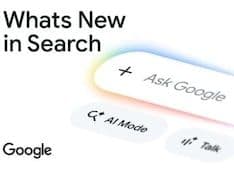
Google I/O 2026: Google Revamps Search Experience With AI Agents, Multi-Modal Queries
Google I/O 2026 was held at the Shoreline Amphitheatre in California on Tuesday. During the keynote of the annual developer conference, the tech giant announced a major overhaul of its Search experience, calling it the biggest change to the Search box in over 25 years. Among the most notable changes is the new intelligent Search box, built on Gemini 3.5 Flash. The revamped experience aims to make it easier for users to ask more natural, complex, and multi-modal queries using text, images, videos, files, and even Chrome tabs.
View

Who Is Andrej Karpathy, the Renowned AI Researcher Who Joined Anthropic?
Andrej Karpathy, an artificial intelligence (AI) researcher and influential figure in the field, is joining Anthropic. On Tuesday, the OpenAI Co-Founder announced his decision on social media, highlighting that his role will focus on research and development. While he did not share more about the focus area, reports claim that Karpathy will be involved in the pretraining process. It is expected that he will continue his work with Eureka Labs as well. Notably, this is the first job the researcher has taken up after the short stint at OpenAI between 2023 and 2024.
View
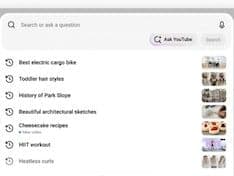
Google I/O 2026: Ask YouTube Brings Conversational Search for AI-Powered Video Discovery
Google announced Ask YouTube at Google I/O 2026, introducing a new conversational search feature that lets users ask detailed questions and refine results with follow-up prompts. The tool uses Gemini to surface relevant videos from across YouTube, including Shorts and long-form content, and presents them in a structured response. Ask YouTube is currently available to YouTube Premium members aged 18 and older in the US, with a wider rollout to all users planned in the coming months.
View
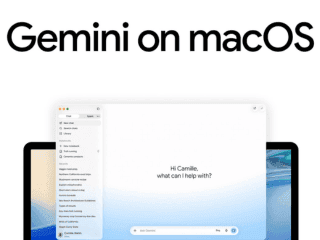
Google IO 2026: Gemini App for macOS Gets Spark Upgrade, Bringing Agentic Capabilities to Apple’s Mac
Gemini Spark was introduced by the Mountain View-based tech giant on Tuesday during its annual developer conference, Google I/O 2026. The new Gemini Spark is the company's latest personal AI assistant, which is backed by Google's latest Gemini 3.5 series models. During the event, the tech giant also announced that its new personal AI assistant will also be rolled out to Apple's macOS in the Gemini app, along with a new voice experience, similar to Google's Rambler. The Gemini Spark upgrade will initially be available in the US to paid subscribers, while other features will be released globally.
View
Google Brings C2PA to Gemini App, OpenAI Adds SynthID to AI Images as Industry Pushes for Transparency
The artificial intelligence (AI) industry is slowly adopting a multi-layered content verification system to help users understand when content is digitally created or altered, and when it is created organically. At Google I/O 2026, the Mountain View-based tech giant announced integration of the Coalition for Content Provenance and Authenticity (C2PA) content credentials to the Gemini app. After Pixel devices, this is the first time the verification system is being used in the tech giant's products. At the same time, OpenAI announced that it has partnered with Google to bring SynthID watermarking to its AI-generated images.
View

isolved Expands India Operations With New Hyderabad GCC Focused on AI Innovation
For isolved, real estate economics emerged as a key factor in the decision to establish its GCC in Hyderabad over other cities.
View

Mistral AI Acquires Emmi AI to Build a European Industrial AI Stack
Mistral aims to be the dominant AI partner for manufacturers and industrial enterprises operating in sectors including aerospace, automotive, semiconductors, and energy.
View
Google I/O 2026: Docs Live Brings Gemini Voice AI to Gmail, Docs and Keep
Google introduced Docs Live at Google I/O 2026, bringing Gemini-powered conversational AI to Gmail, Google Docs and Google Keep. The new feature lets users speak naturally to draft documents, search their inbox, and organise notes without typing. Google said these voice tools will roll out this summer to Google AI Pro and Ultra subscribers, while Google Workspace business customers will get access through a preview programme.
View
Google IO 2026: Google Showcases Universal Cart That Lets Users Shop in Search, YouTube and Gmail
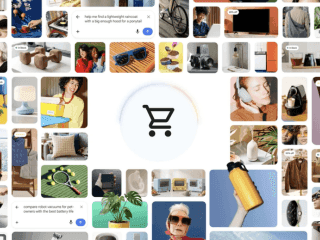
Google hosted its annual developer conference, the Google I/O 2026, on Tuesday. During the keynote, the Mountain View-based tech giant showcased various new features and functionalities that are either rolling out or will be integrated into different Google products later this year, including YouTube, Gmail, Search, and Workspace. However, one of the major highlights of the events was the tech giant's new Universal Cart tool that will provide contextual suggestions, find deals, and enable online payments across the company's product lineup. The new functionality starts working in the background when a user adds a particular product to their Universal Cart.
View

As Foreign Capital Flees India, Startup Founders are Left With Only One Option
Foreign investors are increasingly frustrated by India’s regulatory complexity, weak exit options, and inflated valuations.
View
OpenAI is making it easier to check if an image was made by their models
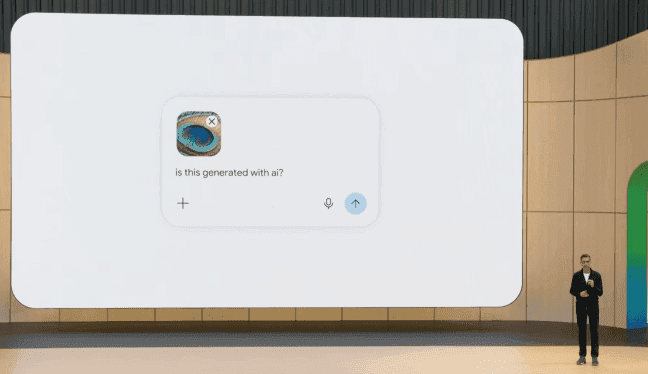
With AI image generators widely available online and more sophisticated than ever, it’s never been harder to tell if an image is authentic. But on Tuesday, OpenAI announced two new measures to help fight the problem. The company has committed to an open standard called C2PA, which adds a clear signal in metadata that an image was generated by AI. OpenAI is also partnering with Google to include an invisible watermark called SynthID, which will be harder to detect, but also harder to erase if bad actors try to cover their tracks. The new protections only apply to images generated by OpenAI products, so they won’t affect the flood of imagery coming from less reputable AI tools; they can help ensure that OpenAI isn’t part of the problem. OpenAI is also previewing a public verification tool that will check for both signals, allowing users to easily test whether an image was generated using AI. Initially, the tool will only extend to images generated by OpenAI products; the company hopes to expand it to cover other tools over time. Founded in 2021, the Coalition for Content Provenance and Authenticity (C2PA) is a non-profit dedicated to mitigating the harmful effects of AI imagery on public discourse. The C2PA standard has been adopted by a range of Google products, but adoption remains inconsistent across the industry. Because the C2PA signal is clearly accessible in the metadata of each file, it can be manipulated, and is most useful among trusted users. SynthID is a newer effort designed to be a more robust measure to meddling. Developed by Google, the SynthID watermark is designed to persist even when bad actors attempt to remove it, either through screenshots, resizing or digital manipulation. The two systems are meant to complement each other, with each addressing the other’s weaknesses. “Watermarking can be more durable through transformations like screenshots, while metadata can provide more information than a watermark alone,” OpenAI noted in its announcement. “Together, they make provenance more resilient than either layer would be on its own.”
View
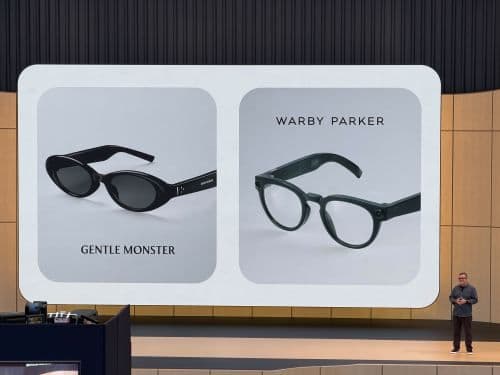
Google takes a page out of Meta’s book, announces new audio-powered smart glasses at IO 2026
Google is getting (back) into the smart glasses game. At Google I/O on Tuesday, the company announced a new partnership with Warby Parker and Gentle Monster to produce a new line of AI-powered glasses. The company says that the devices will be built to pair with Android and iOS devices and were designed in collaboration with Samsung. They will be available later this year, the company said. Google is calling the new devices “audio glasses,” in that users will be able to issue verbal commands to them and get things done via its ecosystem of apps and services, including Gemini. The user simply talks to their glasses (the demo shared on Tuesday involved a Googler ordering a coffee online by merely talking to the glasses), and the device, when synced, complies. Google has dabbled in smart glasses a number of times over the years. It notoriously launchedGoogle Glassyears ago, which ultimately helped spawn the derogatory term “glassholes.” The smart glasses space has changed a little bit since then, however. Lately, major companies — most notably Meta — and a small army of startups and smaller firms, have invested in the space. Google Search as you know it is over Google updates Gemini app to take on ChatGPT and Claude Google introduces Gemini Spark, a 24/7 agent assistant with Gmail integration How to use Google’s new information agents
View