Latest AI News
DeepSeek Slashes V4 Pro Prices by 75% Permanently
The company’s aggressive pricing strategy is expected to increase pressure on AI companies globally.
View
India is Not Ready for Mythos Tsunami
With Anthropic claiming Mythos identified over 10,000 critical vulnerabilities in just one month, Indian regulators and banks are bracing for a fresh wave of AI-driven cyber threats.
View

Why Big Tech’s AI-Driven Layoffs Have Failed to Deliver Value
AI-driven layoffs may free up budget, but cutting jobs doesn't create returns. The companies winning the AI race aren't replacing people, they're investing in them.
View

Google Introduces Gemini 3.5 Flash Low to Help Antigravity Users Maximise Usage
Ever since Google restructured its Gemini plans to a compute-based usage system, it has struggled to provide users of its agentic coding platform, Antigravity, with enough tokens. The Mountain View-based tech giant, last week, announced a shift from the message-based usage to one that measures the number of tokens exhausted. Once the new system was rolled out, users began complaining about hitting rate limits on Antigravity very quickly. Things were so bad that the tech giant had to increase the Antigravity rate limit twice, but it appears even that was less. Now, the company is solving the problem with a new Gemini 3.5 Flash variant.
View

Rajasthan Partners With Wadhwani AI to Deploy AI Tools for Agriculture Services
The foundation will provide technical support to the state government for a period of three years without any financial burden on the government.
View
AI Models Can Now Overhaul Policies Like GST. But Should They Be Trusted?
The biggest challenge of a CGE model is that most AI systems are trained on metrics of developed economies.
View

Shunya Labs Releases Open Standard for Stuttering Annotation
SAML is an XML-based specification that extends W3C SSML standards and includes schema validation to ensure interoperability across tools.
View

TCS launches Sovereign Cloud Offering in Europe to Focus on Data Localisation
TCS’ SovereignSecure Cloud platform targets governments and regulated sectors as enterprises across the EU step up focus on data sovereignty, regulatory compliance, and secure AI adoption.
View
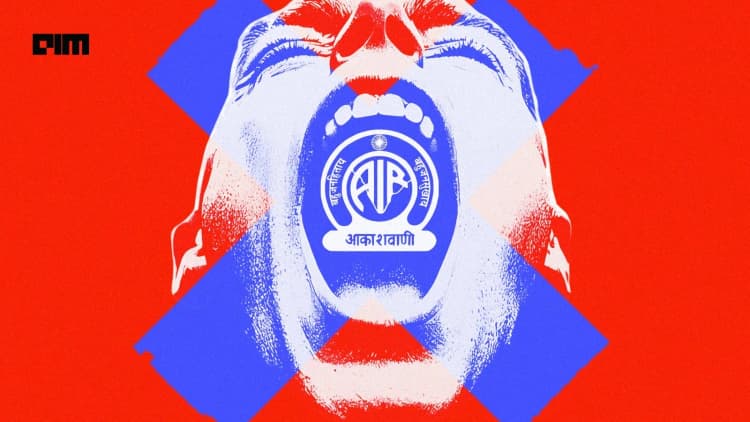
India’s Voice AI Boom is Missing One Thing—and All India Radio Already Has It
AIR represents one of the most comprehensive repositories of spoken Indian languages.
View
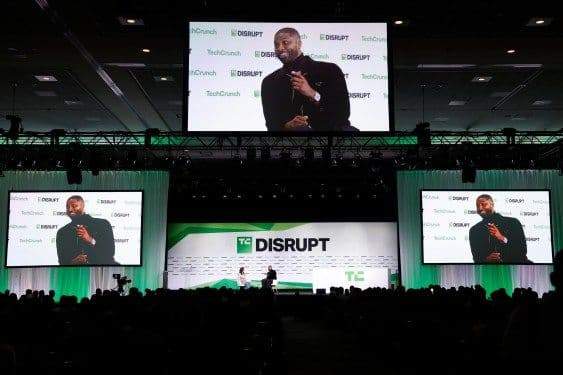
5 days left: Save up to $410 on TechCrunch Disrupt 2026 passes before prices increase
Five days. That’s all that’s left to lock in one of the smartest advantages you can give yourself as a founder, investor, or operator right now. Early Bird savings forTechCrunch Disrupt 2026end May 29 at 11:59 p.m. PT.Register nowto save up to $410 before prices increase and secure your spot at the center of the startup ecosystem. Advancing from idea to IPO takes time and how you spend that time can make the difference in whether you stall or scale. Many think it’s the pitch that slows things down. But in reality, it’s access. Fundraising is a long game of chasing proximity. Cold outreach. Missed intros. Weeks waiting for replies that never come. You spend as much time trying to get in front of the right investors as you do refining your story. Without access, capital is moving. Deals are getting done. Just not with you. WhenDisruptcomes to Moscone West in San Francisco, October 13–15, 2026, access isn’t accidental because it’s built into the experience. Those who attend can access: YourDisruptticket gives you access to candid, tactical, and unfiltered insights from active founders, top-tier investors, and operators scaling real companies like: Explore the sessions these tech leaders will lead on theagenda page. Andregisterbefore May 29 at 11:59 p.m. PT to save up to $410 and show up with more opportunities to connect, fundraise, and scale. WhenDisrupt hits San Francisco, more than 10,000 founders, investors, and operators, along with300+ startups, will gather with one goal: advance deals. That changes the pace of doing business immediately. Instead of months of back-and-forth, conversations start — and move faster. You’re engaging across: You’re not burning through resources trying to get into a meeting — you’re already in one. Disrupt is apremier global startup eventwhere the ecosystem converges to move ideas, deals, and companies forward. And when youregister before May 29, you can save up to $410 before rates increase. Secure your pass before this limited-time pricing ends. AtDisrupt, you’re face-to-face with investors who can ask questions on the spot, understand how you think beyond your deck, and evaluate your vision directly. You can read signals immediately to determine what resonates, what doesn’t, and where to adjust. That kind of feedback loop compresses timelines. What normally takes weeks begins to take shape in a single day — especially as you move between sessions, meetings, and conversations across the venue. 80+ Side Events across the Bay Area for networking, workshops, and social connections extend the value of your Disrupt ticket. Register nowwhile Early Bird pricing is still available and maximize every opportunity to build momentum before prices go up. Don’t settle for collecting contacts when you can come to Disrupt to connect capital to opportunity.Find your ticket matchand plan how you’ll spend your time here. With more than 20,000 curated meetings and dedicated environments like investor receptions and structured networking,Disruptlets you hear directly from founders and investors actively deploying capital and scaling companies. The value is in starting conversations that go somewhere, and bringing someone with you helps turn more of those conversations into real opportunities. Register nowto save up to $410 before Early Bird pricing ends May 29 at 11:59 p.m. PT. After that, ticket prices increase — and so does the cost of waiting. If fundraising is already on your roadmap, waiting doesn’t make it easier. It just delays access. Secure your TechCrunch Disrupt 2026 pass today and save up to $410 before prices go up. Put yourself in the room where deals actually start — and where the next stage of your company can take shape. Register nowbefore Early Bird pricing ends May 29 at 11:59 p.m. PT.
View
Startup Battlefield 200 applications close in days: Apply before May 27
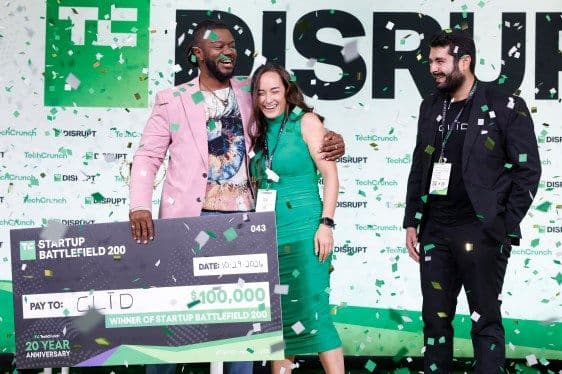
The deadline to apply or nominate forStartup Battlefield 200is Friday, May 27. This program is your shot at VC access, global visibility, TechCrunch coverage, and $100,000 in equity-free funding. If you’re building a breakout startup — or know a founder who is — now is the time to move. Apply todayfor the opportunity to take theTechCrunch Disrupt Stagealongside 200 of the world’s most promising early-stage startups. Pre-Series A founders, this is your last call: the strongest startups are already entering the arena, and the application window is closing fast. If your startup has already been nominated,don’t wait to finish your application. The final week always moves quickly, and last-minute submissions risk getting buried as applications surge ahead of Friday’s deadline. Know a startup that deserves the spotlight?Nominate them nowso they still have time to apply before May 27. Some of the most consequential companies in tech history didn’t launch with splashy fundraising announcements. They started with a pitch. Dropbox demoed to a room full of skeptics. Cloudflare took the stage before most people understood what edge networking meant. Discord was still a scrappy gaming startup called Hammer & Chisel. They all passed through the same crucible: Startup Battlefield 200. That’s not a coincidence — it’s a pattern. And it starts with an application. Startup Battlefield 200has never been a competition for the most polished companies. It’s a competition for the most promising ones. Pre-launch is fine. No revenue is fine. What matters is whether what you’re building genuinely changes something — not incrementally, but meaningfully. If you or a founder you know is building something impactful, then the application itself becomes the first pitch.Apply before May 27. Startup Battlefield 200is where breakout companies get discovered. Selected startups will showcase live on the Disrupt Stage in front of 10,000+ attendees, leading VCs, global media, and the broader TechCrunch audience. This is your opportunity to gain investor exposure, receive direct VC feedback, and prove your company belongs among the next generation of category-defining startups. Every one of the 200 selected companies receives: And every selected company pitches, whether on the Disrupt Stage or the Pitch Showcase Stage. Both put founders in front of the investors, media, and partners who attend Disrupt specifically to find what’s next. You don’t need to make the top 20 for this experience to change your trajectory.Get started by nominating and applying here. More than 1,700 companies have competed in Startup Battlefield 200. Together, they’ve raised over $32 billion and generated more than 250 exits, including acquisitions by Microsoft, Google, Salesforce, Uber, and Amazon. The network runs so deep that alumni have even acquired each other: Dropbox acquired fellow Battlefield 200 alum DocSend in 2021. This is also the same launchpad that helped accelerate companies like Fitbit, Trello, and Mint. Behind every one of those outcomes was a founder willing to make a bet on themselves publicly, in front of people who were paying attention.Apply and learn more here. We’re looking for ambitious early-stage startups building innovative, potentially category-defining products. Applications are open globally across all industries. Most selected companies are pre-Series A, though select Series A startups may qualify on a case-by-case basis. To apply, startups should have: Thousands apply every year. Only 200 are selected. Just 20 finalists pitch live on the Disrupt Stage. One startup takes the crown and wins $100,000 in equity-free funding. The founders who wait until they feel ready often wait too long. You do not need to be polished. You need to be promising. If you’ve been sitting on this, here’s the reality: the worst outcome is you don’t get selected this cycle — and you come back next year with a stronger application because you went through the process. The stage matters. The community lasts. The milestone is real. But the deadline is now one week away. If you’re building something category-defining — or know a startup that deserves the spotlight —submit your nomination and complete your application before Friday, May 27.
View

The pope’s AI encyclical isn’t really about AI
Pope Leo XIV published hisfirst encyclicalon Monday, dubbedMagnifica Humanitas,on “safeguarding the human person in the time of artificial intelligence.” And while AI is the hook, the problems Leo focuses on are older and more pervasive: inequality, war, the erosion of democracy, and the concentration of power in the hands of those who don’t necessarily care whether humanity writ large remains magnificent. Throughout the 200-page document, which the pope presented alongside Anthropic co-founder Chris Olah, Leo argues that technology built and governed by a small elite cannot, by definition, serve the common good. “When such power is concentrated in the hands of a few, it tends to become opaque and evade public oversight, increasing the risk of distorted forms of development that give rise to new dependencies, exclusions, manipulations and inequalities,” he writes. “In fact, as with every major technological shift, AI tends to amplify the power of those who already possess economic resources, expertise and access to data,” the encyclical continues, highlighting concerns that elites can use their power to “shape information and consumption patterns, influence democratic processes and steer economic dynamics to their own advantage.” The encyclical comes a few days after President Donald Trumpdelayed signing his executive order on AI,which would have given the government oversight over new models before they are released,reportedlyon the urging of VC investor and former White House AI czar David Sacks. Pope Leo called for AI to be guided by “clear criteria and effective oversight” grounded in participation from communities that will be affected by it. More concretely, Leo called for an end to the AI arms race “for ever more powerful algorithms and larger datasets” that companies and countries believe will “secure geopolitical or commercial dominance.” “To disarm means discrediting the assumption that technical power automatically confers the right to govern,” he wrote. Again, these dynamics predate AI. Pope Leo XIII’s 1891 Rerum Novarum addressed the same concentration of power during the Industrial Revolution, but we needn’t look back that far. Elon Musk’s acquisition of Twitter and deployment of the platform to help elect Trump; thehundreds of millions flowingfrom tech elites into super PACs to block AI regulation — the kind of pattern that clearly inspired Leo XIV’s work. The pope comes to the same conclusion that many have arrived at: the surreal power and capabilities of today’s AI raise the stakes enormously. Notre Dame Law School professor Paolo Carozza, a member of the Pontifical Academy of Social Sciences and chair of the Meta Oversight Board, told TechCrunch that AI-driven misinformation and deepfakes have “corroded our capacity to recognize what’s true and what’s not true, and that really has consequences for democratic politics.” The tech industry’s practice of “harvesting and manipulating” human data, he added, poses “fundamental challenges to cognitive freedom.”
View