Latest AI News
OpenAI Begins Hiring Engineers for Robotics Division
The company envisions everyone having a personal robot that does everything they need.
View

How Data Centres Are Fighting Back Against a New Wave of Cyber Threats
As cybercriminals abandon brute-force tactics in favour of AI-powered identity-based attacks, the industry faces a stark choice: either evolve its defences or risk becoming the weakest link in the nation's digital backbone.
View
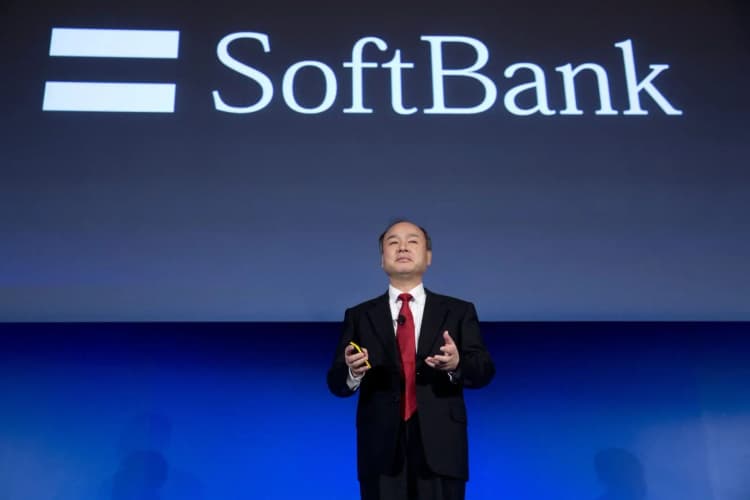
SoftBank Announces Plan to Build 5 GW of AI Data Centre Capacity in France
The initial phase includes a €45 billion investment to establish 3.1 GW of AI data centre capacity in the Hauts-de-France region.
View

Intel, 3DGS Explore Advanced Semiconductor Packaging Facility in Odisha
The proposed project could position Odisha as a major hub for semiconductor manufacturing, advanced packaging, AI infrastructure, and next-generation data centres.
View

Hitachi Energy India Aims for 30% Boost in Data Centre Growth with ‘Grid-to-Rack’ Solution
The power solution will enhance energy supply for data centres and increase the market size for power infrastructure spending by 10-15%.
View
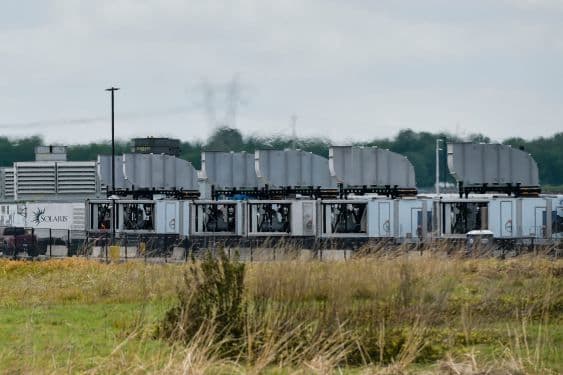
Erin Brockovich takes aim at data center secrecy
Environmental activist Erin Brockovich has a new mission: Bringing more transparency to data center construction and the impact those data centers have on nearby communities. Brockovich — who was famouslyplayed by Julia Robertsin a film dramatizing her legal case against Pacific Gas & Electric — recentlylaunched a website with a mapof data centers across the United States. The website describes the map as “work in progress” that includes data centers reported by members of the surrounding community. Ina Substack post, Brockovich said that after putting out a call for reports of data center-related issues in April, she received nearly 4,000 submissions in the first month alone. “The single most common concern — more than noise, more than water usage, more than rising utility bills — is the one word that keeps appearing in submission after submission:transparency,” she wrote. Brockovich added that she’s not making a “making a blanket argument against data centers” or AI, but rather against “the pattern our map documents: projects announced after permits are already secured, developers who don’t return calls, local officials who signed NDAs before their neighbors knew a project was being considered.”
View
Making sense of the debate over AI psychosis
Box founder Aaron Levie got us talking this week with a social media post suggesting that tech CEOs are“uniquely prone to AI psychosis.” On the latest episode ofTechCrunch’s Equity podcast, Kirsten Korosec, Sean O’Kane, and I did our best to unpack Levie’s comment. For one thing, we noted that he isn’t disavowing AI tools, merely insisting that CEOs need to actuallyusethose tools to understand them. That’s a relatively gentle note of skepticism compared to other signs of a broader backlash, whether you look atgraduating college students booing any mention of AI, thebad vibes around tech industry layoffs, or the apparentsurge of installs at search engine DuckDuckGoafter Google’s announcement that it’sbringing more AI to the search experience. Kirsten suggested that Google faces a dilemma where it’s “chasing that thing it feels like it has to do to keep up, but it’s messing with the thing that people attach to the brand the most, and it’s not improving it.” More broadly, she wondered “if this anti-AI moment is an opportunity for startups or other areas of business.” Keep reading for a preview of our conversations, edited for length and clarity. Anthony Ha:AI is incredibly polarizing. And that’s part of what’s challenging to talk about, you can feel a little crazy because [simultaneously,] everybody’s using it and everybody loves it, but also no one’s using it and everybody hates it at the same time. There are large contingents for whom both of those things are true. On the user side, one thing that was very striking, we [already] talked about Google’s announcements about search andhow AI is becoming a bigger part of search— although it’s been interesting to see how Google has tried to walk that back a little bit, or at least add some nuance in terms of, if you want that 10 blue links experience, there are still ways you can get it. It’s not going away entirely. But I think a lot of people are not excited about the direction Google is going in. And so you see, for example, thatDuckDuckGo said installs are up 30%, which is a huge leap. Now, of course, DuckDuckGo is a much, much smaller product than Google. I don’t think Google is in any immediate trouble, but I think that’s a sign that there is a very significant audience that does not like the current AI direction. Sean O’Kane:I will say one thing that I keep looking for when I look at all of these leading AI labs or tech companies that are really pushing AI features and products — to me, there seems to just be this collapsing towards Anthropic’s approach, this idea of really trying to understand what it is you want to offer people and sticking to that. And Google is one of the ones that I would say is actually still pushing the other direction. They’re trying to do a lot of different things, but they don’t do themselves any favors by being so vague about it. What I mean by that is, when Google goes on stage at IO and talks about the way that it thinks it’s going to change search, so much of what they’re talking about, they’re talking about shopping or stuff that ends in a commercial transaction. And I think so much of what we think of Google as collectively, especially people who have been using it for two or three decades, is as an information retrieval system. Google can struggle with that a lot, where they get reactive fears of how they may be damaging the information retrieval side of things, and their response is, “Yeah, but that’ll still be there. Let’s focus on how it’s going to help you book a flight or something like that.” And then they also go off and sort of shoot themselves in the foot by releasing — it must be very challenging to stress test these systems, but they go out and they release this stuff and they’re running into the same problems they’ve run into for years. Kirsten Korosec:We had a great article that just published about howGoogle doesn’t know how to spell its own name. If you ask it, “How many P’s are in Google?” it says two. It’s this tension between: Google is chasing that thing it feels like it has to do to keep up, but it’s messing with the thing that people attach to the brand the most, and it’s not improving it. What I’m wondering is, we’ve already seen some early evidence of people’s fingers doing the voting or walking for them, by literally going to another service. But I wonder if there are opportunities for other startups out there or culturally speaking, if this anti-AI moment is an opportunity for startups or other areas of business that we haven’t really thought about. Anthony:Absolutely. Again, it’s probably a challenge because there is such a range of opinions. And if you build something that’s tailored for a group that’s skeptical [of] AI, then you’re probably going to alienate other users who are much more evangelistic or gung-ho about it. But I think that’s just the moment we’re living in. And you can see in how DuckDuckGo is promoting itself, that they’re very much emphasizing this idea of being anti-AI, which I find very striking because I’ve mentioned before, [I’ve been] moving away from Google myself, trying out other search engines. And I would say that a year ago, when I started that exploration, even these alternative search engines were still trying to experiment with AI features, emphasizing AI to some degree because they also thought they had to do it. And now I think they’re seeing that there is actually a lane to be like, “No, we just were not interested in that stuff at all. Or inasmuch as we’re doing it, we’re very much putting it in a separate sandbox that’s not going to affect your core search experience.” Kirsten:I think we unfairly sometimes categorize all the tech CEOs as force-feeding people AI. And there’s at least one tech CEO who has come out and said, “I think that there’s a little bit of psychosis among other tech CEOs around AI.” I’m talking about Box founder Aaron Levie, who has come to Disrupt many times and is a friend of TechCrunch for sure. He made these comments about howCEOs are uniquely prone to AI psychosisbecause they’re sufficiently, and I’m reading this, “distant from the last mile of work that still has to happen to generate most value with AI.” I thought that was really interesting. And I’m wondering if there are other CEOs out there who agree with it. I also wonder, as part of that shift of thinking about what has to happen to generate the most value, if they’re also thinking about how their workforce is changing, which is our other topic today — [not] just about the AI divide, it’s also how AI is changing work. And we’ve seen, certainly, some of the bad news side of that, and that is a lot of layoffs. But I think also, we’re seeing big changes in how people work. I’m wondering in the areas that you two cover, if you’re seeing evidence of that, because I don’t think it’s just in the quote unquote “AI startup sector” or the big tech companies. Sean:As far as the companies that I cover, a lot of them tend to be working on, if not physical transportation, then stuff adjacent to it. And it’s seemed much slower there than it is, unsurprisingly, on the software side of things. We’re starting to see some of that changing. We’ve talked on the show a little bit about Mind Robotics, which is the spin out from Rivian CEO RJ Scaringe. And, you know, there’s certainly more AI being applied to physical infrastructure and manufacturing and robotics and self-driving. I think the software side is where it’s really changing things, where you have people whose job is just directly tied to producing code. Anthony:Part of the question, I think, [involves] both AI adoption in companies and then AI-driven layoffs — to what extent are they top down or bottom up? Because I think a lot of other transformations in the workforce in the last couple of decades have at least been, to some extent, bottom up: These are tools that people actually like to use, they bring them in, and then at a certain point, executives and IT managers accept that. There is some sense that a lot of the [belief that there are going to be these] AI productivity gains seems to be embraced by the executives — or, if you’re at a startup, probably by the VCs who are funding you — who love this dream that you can have just a tiny team and be as effective as a company with a much larger team. And I don’t think that that is necessarily impossible, but I think that Aaron’s point is essentially that if you’re not really touching any of the end work, how would you know? He’s also not somebody who’s saying we should just throw out all the AI tools, but he’s saying that you actually have to use these tools and understand what they’re doing. You can’t just look at a slide and be like, “Yes, incredible efficiency, let’s go.” Kirsten:Well, I think there’s a lot of real evidence out there that these companies are using these tools, and it is directly affecting workers in the form of layoffs, and also the way that they work. The two truths are accurate here.
View
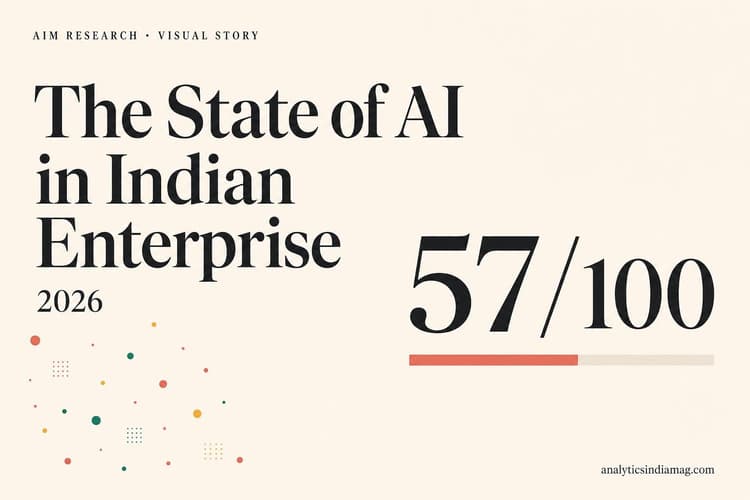
State of AI in Indian Enterprise 2026
India 2026: 57/100. A proprietary scoring of India's largest listed companies on AI maturity — who actually does GenAI, and who doesn't.
View

Salesforce’s Arundhati Bhattacharya Sees OpenAI and Anthropic as Partners, Not Threats
Salesforce says the next phase of enterprise AI will be won through integration, not isolation.
View

SoftBank says it will invest up to €75 billion to build French data centers
SoftBank Groupannounced todaythat it plans to spend up to €75 billion (around $87 billion) to expand data center capacity in France. The goal, the firm said, is to develop and operate up to 5 gigawatts of additional data center capacity. The first phase of the plan involves building data centers in Dunkirk (Loon-Plage), Bosquel, and Bouchain to deliver 3.1 gigawatts of capacity to the Hauts-de-France region by 2031. SoftBank, which isboth an investor in and customer of OpenAI, says this will be its largest AI infrastructure investment in Europe. In a statement, French economic minister Roland Lescure described the announcement as a “testament to President Emmanuel Macron’s ambition to position France as a leading destination all along the AI value chain.” In the United States,opposition to data center construction is heating upover environmental concerns, as well as questions about how data centers affect the electrical grid and utility prices. Nonetheless, SoftBank earlier announced plans to build a data center in Ohio,powered by a new 9.2 gigawatt natural gas plant.
View
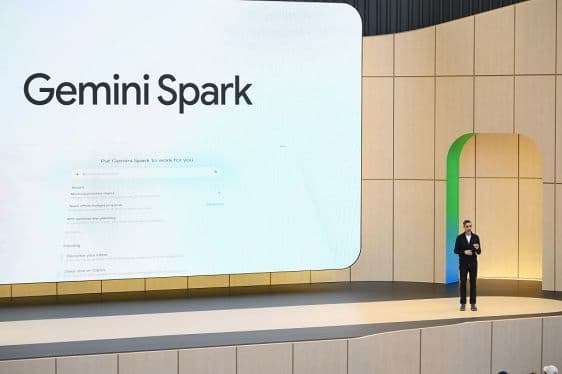
I put Google’s 24/7 AI assistant Gemini Spark to work, and it’s actually pretty useful
Gemini Sparkis Google’snew 24/7 agentic assistant, designed to help you help you “navigate your digital life,” which essentially means getting your online to-dos done, summarizing the things you don’t have time to read (like the entirety of your inbox), or organizing something that would have otherwise involved too much screen time-filled manual labor, like a personal expenses spreadsheet. The service was firstintroducedat Google’s annual developer conference in May, where CEO Sundar Pichai joked that Spark, which runs on virtual machines in the cloud, means that “yes, you can close your laptop.” The in-joke here is that he’s comparing Spark to other agentic AI systems, like the ever-popular OpenClaw, which require keeping the machine awake to run its tasks. Spark, he’s suggesting, is agentic AI for the rest of us — those who would rather get things done without nerding out about it by setting up an always-on AI machine. In practice, Spark is still very much designed for work-adjacent tasks, given its integration with Google’s productivity apps like Gmail, Calendar, Docs, Sheets, and Slides. (After all, how many times are you preparing a deck for in your personal life? Unless you’rea Gen Z creator explainingthe latest meme to your chronically offline friends, that is?) Google also struggles a bit to come up with real-world examples that would convince someone that Spark is a “must-have” rather than a “nice-to-have” tool for personal use. Among its suggestions for “personal productivity” is using Spark to scan your emails and calendar for the day and send you a recap with your top three must-do tasks,” which already assumes you are a person who jots down your to-dos in a calendar or email app, instead of a notepad (virtual or otherwise), or just keeps a running list in your brain. (E.g.,Grab prescriptions and shampoo at Walgreens. Buy more dog food. Hang out with friends on Saturday.) Google also suggests you could use Spark as a weekend planner, by drafting a Google Doc “suggesting three free activities based on my open calendar blocks for the upcoming weekend,” which, again, assumes you are some sort of scheduling nerd in your offline life. Nevertheless, with early access to Gemini Spark, I decided to put it through its paces, with what are perhaps some real-world suggestions of my own. I came away surprised that it was a fairly useful implementation of consumer AI, but not one that deserves to have its own brand. For one initial task, I asked Spark for help with a shopping-related research. The idea was to help me with an everyday local drugstore trip for household items, so I asked Spark for product suggestions based on weekly deals and coupons I could clip. At first, Spark seemed to do pretty well here, as it told me exactly what products were on sale that matched my needs, and suggested coupons to clip in the Walgreens app for extra savings. It even suggested how I could stack coupons for one item by combining online promo codes, if I were placing an online pick-up order and was planning to spend more on personal care items. However, as is often the case with AI, the devil was in the details, as one of the promo codes was invalid when I tried it, despite meeting what the AI said were the requirements. Still, Spark pointed me to some other savings — like buy-one-get-one-free and rewards deals that made up for this gaffe. In another test, I asked Gemini for help with a packing list for a day trip out of town. I asked it to check the weather, gather the event details, and make suggestions of what to bring with us, like sunscreen or water, to see what it would come up with, after it learned more about the activity. I asked for the final list to be imported into Google Keep. Guess what Spark can’t do? Use Google Keep. That’s a huge oversight, given that Google’s notetaking app would be essential for anything in the realm of personal productivity. Instead, it offered to make me a doc or draft me an email because, sure, that’s the sort of thing I’d want to check for my list of to-brings. (??) In terms of the list itself, however, Spark was spot-on, suggesting lawn chairs or blankets, water, sunscreen, sunglasses, a light layer for when the sun goes down, a reusable shopping bag, and an umbrella for possible light showers that day. It also reminded me that dogs were not allowed, despite the event being outdoors. (Sorry, Princess!) My child has aged out of summer camps for kids (and should probably just get a job), but before we went that route, I wanted to scour the local area to find out if there were any summer activities available for teens that she could do in addition to her engineering camp in June. I asked Spark to do a thorough search and find any and all suggestions, keeping in mind that we would not want to drive more than around 30 minutes. Spark generated a decent list of ideas for activities that matched my child’s interests, and plotted out how far they were from home. Unfortunately, I forgot to prompt Spark to get the costs or dates of the programs, and it didn’t bother to tell me, which meant I still had to do more manual research on my own. Like many, I subscribe to too many newsletters, so I put Spark to work on preparing me a weekly summary, which would arrive every Friday, focused only on the top five posts or articles I shouldn’t miss reading, along with a link. The AI got to work, digging into my inbox and, within moments, had presented a summary of several interesting articles to read that included context and a link. (The link ended up being a Google.com redirect that didn’t work — I had to click the link displayed on the redirect page, as it never automatically sent me to the site in question.) While I generally liked the suggestions, Spark only returned four articles to read when I had requested five. Spark had interpreted the request as “4-5” for some reason. For another request, I asked Spark to compile a list of weekend activities around town for me on Fridays, so I can get to planning my weekend fun. As someone who lives in a smaller city, there aren’t always big events or things to do, so making sure you don’t miss the anticipated street festival or hot show when it comes to town is key. But there’s no single source to find everything there is to do — you have to read multiple local newsletters, visit websites and Facebook Groups, read the newspaper online, and more. Spark instead set up a web search, combined (at my request) with a search of my Gmail for any relevant local newsletters, digests, or lists with keywords indicating a local activity suggestion. It then compiled a list of upcoming weekend events and noted that if I wanted to add any to my calendar, I could just reply. If it wasn’t for Spark, I would have never known there is an Annual Beaver Queen Pageant nearby, which apparently features people in beaver costumes raising money for wetland conservation? OK, I might need to check that out. (You still have to tell Spark to add it, then click a button to confirm, but this is easier than the manual labor of reading through so many sources for ideas.) For my last request, I set Gemini Spark to work on tracking price drops for an expensive eye cream. As a penny-pincher, I’d never buy it unless there was a crazy sale. I wanted Spark to keep track of the price changes for me and alert me if the eye cream ever became more affordable. However, Spark’s interpretation of this request was to simply recheck the price every two weeks to see if it dropped below my target. I’m not sure that would be frequent enough to spot a deal. (I’ll update if the results are successful, but I believe I’ve set too low a bar as my target — even after raising my bar by another $10! — so this is probably just wishful shopping at this point. But I’m always hopeful some online retailer will make a pricing mistake one day!) I can already see how I’ll be able to integrate Spark into my everyday life in other ways, too — I already have ideas for more email monitoring and cleanup tasks, for instance. The next time I change the home’s air filter, I’m going to ask Spark to remind me in three months to swap it out. If I ever get around to taking a vacation, I’ll probably have some tasks for it then, as well. While Spark already performed fairly well on my tasks with only small quibbles, the biggest criticism I had was that there’s no need for this to be a standalone product with a different branding. I think that adds to consumer confusion in this day and age, where there are so many things happening in the AI space, and where every new model has its own name and number, and some of these are quite wild. (Nano Banana, anyone?) Why not just pitch Spark as something Gemini can do out of the box, instead of making it its own product? Why does the toggle have to say “switch to Spark,” instead of just “switch to Tasks?” (If it even needs to have its own space in the user interface!) I personally don’t want to carry the mental load of trying to determine whether something is a question or a task; I just want to type in a question or request and be done with it. I also think the lack of Keep integration is a major miss in terms of being helpful with your personal productivity. Google Docs is overkill for a packing list. And, unfortunately, for iPhone users, tapping into Gemini Spark directly from your device through a push of a hardware button or gesture won’t be possible — unless Apple announces this at next month’s WWDC? Instead, you’ll need to launch the Gemini app and use it from there. (Another issue with having Spark as its own toggle within Gemini — you can’t program the iPhone’s Activity Button to go directly to Spark, which is separate from Gemini’s chatbot interface. How great it would be if everything Gemini does were all in a single destination! Ugh!) And while Spark will later be able to do more with MCP integrations, not being able to set it to perform certain tasks, like booking your favorite date night restaurant regularly through Resy or looking for flight deals on a preferred booking engine, for instance, makes Spark feel somewhat lacking for the time being, given that not everything you do online takes place in Google’s universe of services. (Also, I’d really like to text Spark. I wish that were an option, too.)
View
Meta is reportedly developing an AI pendant
Meta is developing an AI-powered pendant that it plans to start testing in the next year, according to a memoviewed by The Information. This device would presumably build on the work of Limitless, anAI device startup that Meta acquiredat the end of 2025. The startup made an AI pendant that users could attach to their shirt or wear as a necklace to record their conversations. At the time, Meta said the acquisition would allow it to “accelerate our work to build AI-enabled wearables.” Earlier AI wearables have failed to catch on with consumers — perhaps due toprivacy concerns and tone-deaf marketing, or perhaps because theyjust weren’t that useful. But companies like OpenAIaren’t giving up. The memo also reportedly states that the company is planning to expand its lineup of AI glasses and launch a business subscription called Wearables for Work. With all these planned devices, Meta is apparently hoping to reverse the fortunes of its hardware-focused Reality Labs division, whichlost $4 billionin the first quarter of this year. TechCrunch has reached out to Meta for comment.
View