Latest AI News

SpaceX Acquires Cursor, the AI Coding Startup Competing With Claude Code and OpenAI Codex
SpaceX has acquired AI coding startup Cursor in a $60 billion (roughly Rs. 5,66,500 crore) all-stock deal, bringing a prominent competitor to Anthropic's Claude Code and OpenAI's Codex under its growing artificial intelligence business. The acquisition follows months of collaboration between the two companies on AI model training and infrastructure, and comes days after SpaceX's public market debut. The deal also marks the latest step in SpaceX's efforts to expand its presence in the AI sector by combining software development capabilities with large-scale computing resources.
View
Enterprise AI’s Real Problem Isn’t the Technology, It’s the Execution
Enterprise AI’s real frontier isn’t more workflows, it’s execution. With 78% of organisations stuck in pilot mode and only 14% reaching production scale, the gap between AI ambition and operational reality is 2026’s defining leadership challenge.
View

Madhya Pradesh Explores AI-Driven Governance Solutions With Gnani.ai
The discussions focused on how emerging technologies can help improve accessibility, efficiency, and responsiveness in public service delivery
View

Anthropic’s latest feud with the Trump admin may actually help it, sales data suggests
Anthropic is having a month. The AI lab finished May by surpassing OpenAI in market share of business spending for the first time, Ramp justrevealed. It raised $65 billion at a $965 billion valuation (also besting OpenAI) at the end of May, then waltzed into June by filingconfidential paperwork for an IPO, reportedly on the strength of itsfirst-ever profitable quarter. Then on Friday, the Trump administration renewed its war on the model maker by sending a letter demanding it ban non-Americans, including Anthropic’s employees, from accessing its state-of-the-art models: the limited-release Mythos 5 and the more guarded version of Mythosreleased to the public three days earlier, called Fable 5. This essentially forced Anthropic to pull its latest all-powerful model from the market altogether. Although the White House invoked an obscure export control directive when ordering the ban, the exact cause remains unclear. Thechatter was that hackers easily bypassed Fable 5’s guardrails, which were intended to prevent access to Mythos’ capabilities. That model is so good at finding security flaws in software code that Anthropic itself marketed it as dangerousand restricted its public release. This new drama comes after Anthropic famously refused to allow the government to use its models for mass surveillance of Americans and fully autonomous weapons. As a result, in March, the Trump administration declared the companya supply-chain risk. That didn’t deter Anthropic’s sales to businesses. Quite the opposite, Ramp’s data shows. Ironically, this latest feud with the Trump administration, which also appears to validate the hubbub over Mythos’ mythological power, may help rather than hurt Anthropic, according to Ramp’s lead economist, Ara Kharazian. Kharazian is the person who compiled the business-spending AI data. “If anything, it’ll probably boost them,” Kharazian told TechCrunch. “Anthropic’s best month on record, as far as business adoption, was the month that the Department of Defense labeled them a supply-chain risk. There’s a lot of aura that comes with your model specifically being named too dangerous to use.” Ramp’s data isn’t granular enough for us to see how much of a financial hit the company will take by pulling Mythos and Fable 5 off the market. Still the data, from more than 70,000 businesses that use its platform, shows that customers heavily use Anthropic’s Opus models and that business use has been growing. For instance, Ramp reported that Anthropic’s share of AI subscriptions paid for by businesses rose 2.5 percentage points in May to 41%. This compares to OpenAI, which commanded 39.5% of AI subscriptions by its customers, essentially flat from the prior month. (OpenAI still greatly leads Anthropic in overall consumer usage, according tonew data from Sensor Tower.) Beyond subscriptions, the vast majority of what companies spend money on is API calls to the model, which cover token use for activities like coding. Anthropic’s Claude Code has a strong reputation as a powerful AI coding tool. Ramp can’t always see from the spending data which models most businesses are using. When it can see the model details — in about one-third of transactions — businesses are mostly spending on various flavors of Claude Opus, particularly the later versions. Opus is the model that preceded Mythos and is still openly available. In fact, in late May, Anthropicreleased a new version, Opus 4.8. Mythos had not been on the market for that long, having been released to limited users as of April. And Fable 5 was shut down after a few days. While we can’t predict how this latest drama with the White House will impact Anthropic’s ability to go public as it hoped to (public-market investors tend to be wary of companies embroiled in controversies with the government), the numbers indicate that Anthropic’s available models are more popular with businesses than ever before.
View

Reliance Is Sabotaging Telegram Access Outside India, Claims Pavel Durov
Telegram CEO accuses Reliance of disrupting Telegram access beyond India through alleged BGP route hijacking, claiming the issue affected users in countries including the UAE and was propagated across international networks.
View

SpaceX valuation balloons to $2.6T, briefly passes Amazon
SpaceX briefly passed Amazon to become the fifth-most valuable company in the world, and nearly eclipsed Microsoft, before the company’s shares pared back those gains before the market closed Tuesday. The newly public company’s stock had already climbed 20% on Monday — its first full day of trading. Tuesday’s news thatSpaceX was acquiring AI coding company Cursor, along with the start of options trading on SpaceX’s shares, sent the share price even higher, spiking its valuation to $2.9 trillion before it ultimately settled back down. This is all despite the fact that SpaceX posted a $4.9 billion loss on $18.7 billion in revenue last year, compared to Amazon, which turned a $78 billion profit in 2025 on $717 billion in sales in 2025. SpaceX has recently added new revenue streams in the form of compute leasing deals with Anthropic and Google, though, and will absorb the revenue from Cursor when that deal closes in the third quarter. The Anthropic and Google deals are non-binding, but investors don’t seem to mind either way. Elon Musk’s space-and-AI company had added roughly $1 trillion to its valuation since going public on Friday. That transaction netted SpaceX nearly $86 billion in fresh capital, largely on promises that it can create an AI business worth trillions of dollars — a wild claim for a company that recently tore its AI division down to the studs. SpaceX first revealed a collaboration with Cursor in April, at a time when Musk said his AI company xAI — now a part of SpaceX — “was not built right [the] first time around” and that he was rebuilding it “from the foundations up.” SpaceX is making the acquisition with $60 billion in company shares. SpaceX’s historic IPOsaw it debut with a valuation of around $1.7 trillion, and the transactionraisednearly $86 billion for Musk’s company. SpaceX only made about 4% of its total shares available for trading, which experts predicted would make the stock more susceptible to wild swings. That appeared to be the case Tuesday, as traders swapped more than 300 million SpaceX shares throughout the trading day — more than half of the 555 million available on the public market post-IPO, according to data fromthe Nasdaq stock exchange. The volatility continued into after-hours trading, which saw SpaceX’s valuation briefly eclipse Amazon’s market cap for a second time before falling again.
View
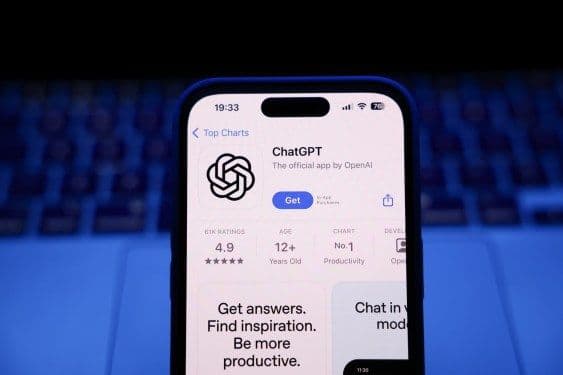
ChatGPT’s market share slips below 50% for first time
More than three and a half years after ChatGPT’s initial release, AI assistants are now used by millions of people worldwide, and the competitive landscape is changing fast. While OpenAI’s chatbot is still the most popular assistant globally, its market share has dipped below 50% for the first time as users are migrating between different assistants like Google’s Gemini, Anthropic’s Claude, and xAI’s Grok, according to analytics firm Sensor Tower’s State of AI Report for 2026. ChatGPT’s growth has been impressive. It became the fastest app ever to reach 1 billion monthly users, as Sensor Towerreportedthis month. Notably, OpenAI counts weekly active users, and it last reported900 million of them in February. The chatbot still remains the most popular AI assistant worldwide with over 1.1 billion monthly users, followed by Gemini with 662 million and Claude with 245 million. Until January, ChatGPT commanded over 50% market share, but by May’s end, it had fallen to 46.4% thanks to the rise of Gemini (27.7%) and Claude (10.3%). Other assistants, including Grok, Perplexity, DeepSeek, and Meta AI, have less than 5% market share. Sensor Tower’s State of AI Report also found that users are increasingly willing to switch between assistants. Specific events appear to accelerate that behavior: OpenAI’s deal with the U.S. Department of Defense (DoD) in February triggered ameasurable spike in uninstalls, for example — suggesting brand trust and values alignment matter to users, not just features. While Gemini’s momentum is largely due to its integration with Google’s broader ecosystem of tools, Anthropic’s Claude has gained a strong reputation for productivity use cases and is closing in on ChatGPT’s user-retention rate. In the first half of 2026, people are on pace to download nearly 2.3 billion AI apps and spend over $4.2 billion on them, according to Sensor Tower estimates. That compares to $1.83 billion in spending in H1 2025 — a jump that suggests the industry is shifting its focus from pure growth toward monetization. That said, both download and spend growth rates have decelerated, an indicator that the market may be maturing even as absolute numbers climb. Regionally, Asia recorded the first download decline of 3.3% in Q1 2026, driven by dips in China and India. Despite leading globally in total downloads, Asia trails North America and Europe when it comes to in-app spending — a split that matters for companies deciding where to invest in premium features and monetization. In the U.S., users are gravitating toward AI assistants for productivity tasks and spending more on premium features. Across platforms, average revenue per user has grown industry-wide, but Claude is standing out. Thirteen percent of Anthropic’s users are paying for a subscription plan — a conversion rate that leads the field and will be a metric worth watching for investors evaluating which AI businesses are building lasting revenue. Sensor Tower estimates that the hours spent on AI apps will have increased from 17.2 billion hours in H1 2025 to roughly 36 billion hours in H1 2026. The top three assistants command 89% time spent on AI assistant apps. Meanwhile, adjacent categories like AI companions or AI content-generation apps remain fragmented and wide open to competition, which represents both a risk and an opportunity depending on which players move first. OpenAI started experimenting with ads in ChatGPT in February. According to Sensor Tower, the company has scaled the number of ads gradually, along with the share of users who see them. By May, an average of 17% of daily users were being served ads — a number to watch as ChatGPT’s monetization strategy evolves beyond subscriptions. Software and shopping are the largest advertiser categories in ChatGPT so far, followed by media and entertainment and food and dining. As ChatGPT deepens its shopping integrations, it is increasingly sending referral traffic to retailers like Target, Walmart, and Costco. Amazon, which has blocked ChatGPT’s web crawlers, has seen stagnant referral traffic from the platform as a result. That creates an opening for others. Sites like Walmart have embedded their own AI assistants to help shoppers find products. While Amazon’s Rufus has seen flat user growth, Walmart’s Spark has been gaining ground. Sensor Tower also noted that Amazon shoppers who used Rufus spent more time in the app and converted at higher rates than those who didn’t, hinting that on-platform AI can meaningfully influence purchasing behavior when users actually engage with it.
View

Robinhood’s note on 10% layoffs shows blaming AI isn’t cutting it
It appears using AI as a cover story for cutting jobs is fast falling out of fashion. Unlike many of his tech industry peers who havecut thousands of jobs this yearciting the need to restructure their teams to make the most of AI, Robinhood’s CEO Vlad Tenev conspicuously made no mention of AI in hisnote to employeesannouncing that the company is letting go 10% of its full-time employees, or about 290 people. Nor did the company’s regulatoryfilingannouncing the move, which instead framed the cuts as a restructuring exercise. Still, Tenev did say the company would use “frontier technologies to push our execution even further,” which sounds like a conscious effort to avoid even naming AI. Which isn’t surprising: Sentimentagainst AIand related infrastructure projects has beentrending lowereven as a small minority of tech executives makeridiculous bank. But Tenev did add to the ongoing narrative that it’s now necessary for companies to operate with smaller teams and “flatter organizational structures,” writing: “We cannot default to operating as a heavily-layered organization. We must be a lean, hyper-focused team where every single individual is empowered to make a massive impact.” We’ve seen companies of various stripes, fromAmazon,Block,Coinbase,GitLab, andIntuitemploying similar language in their layoff announcements, indicating that large teams, bureaucracy, and siloed departments are now seen as undesirable line items at a time when AI tools promise to significantly improve productivity. Some even think it’s a tacit allusion to the fact that tech companiesover-hiredfollowing the COVID-19 pandemic, and are now scaling back as expenses begin to pile up — especially those associated with massive AI usage. Regardless, these companies are doing quite well. Tech stocks have surged broadly, spurred by recordrevenues, improving profit margins (GitLab reported88% gross marginlast month), skyrocketing demand forcloud services, and the belief that the billions being poured into data center projects willproduce returns that are orders of magnitudes higher. Robinhood itselfreporteda 15% improvement in first-quarter revenue in April, and the company said its second quarter is looking better thanks to rising prediction market fees, subscription revenue, and strong equity and option-trading volumes as markets stabilize. The company said on Tuesday it is also closing “a small number” of open roles, and that it would incur about $28 million in costs related to the cuts.
View

Plaud says its software business topped $100M in ARR after shipping over 2M AI notetakers
There aren’t many success stories to refer to when it comes to AI hardware.Plaud, whichmakes AI-powered notetakers, is trying to become one by targeting professionals who take a lot of meetings. The company said it has sold more than 2 million of its devices, including Plaud Pins and credit-card-styled gadgets that stick on the back of the phone. It also said that its subscription business has reached more than $100 million in annualized revenue run rate. Plaud pointed out that many AI companies often rely on digital documents and prompts typed from memories. Its argument is that its devices, which don’t have any screens, help people have conversations in real life and recall important points along with summaries and action items later. “Most AI companies have scaled through software behind a screen. We took a different path. The conversations that actually move things forward don’t happen on a keyboard. We built the interface for the post-screen world. And the market validated it,” said Nathan Xu, co-founder and CEO of Plaud. Last year, the company launched the $179 Plaud Pro, and this year, it addedthe new Plaud Pin S at a similar price. Besides hardware, the company has accelerated its software development, too. Earlier this year, it launched a desktop app that can take Granola-style notes via system audio for online meetings. Last month, it also introducedPlaud Teamswith shared memory to target enterprises. Plaud users can buy the hardware and get 300 minutes of transcription for free. However, if someone has many meetings a day, the free limit is likely to run out quickly. For extra minutes and other features, users can getmonthly, annual, or add-on plans. Xu told TechCrunch that its revenue is largely powered by nearly 50% of the device users upgrading from the basic plan to the pro or unlimited plans. The company doesn’t yet sell standalone software subscriptions. That means, typically, it’s the users who own a Plaud device who are buying its paid plans. The meeting note-taking hardware market has a lot of competition, including accessories companyAnker, Transsion-backed Viaim, Sequoia China-backed Vibe, and YC-backed Pocket.
View

DOJ claims xAI’s unpermitted gas turbines are a matter of ‘national, economic, and energy security’
The Department of Justice on Monday sided with xAI in a lawsuit that sought to stop the company’s use ofdozens of unpermitted natural gas turbinesnear its Memphis data centers, according toWired. The DOJ said if the NAACP, which filed the lawsuit in April, prevails, the result would undermine “American national, economic, and energy security by seeking to shut off the power supply for artificial-intelligence innovation that supports the Department of War’s military operations.” The memorandum filed by the Justice Department said that Grok is one of four AI models that support “mission-critical operations,” such as its recent strikes in Iran. The NAACP started telegraphing its intent to sue xAIlast June, seeking to end the company’s practice of using “mobile” gas turbines at its Colossus and Colossus 2 data centers. Those efforts failed, and Elon Musk’s AI company has since added more turbines, bringing the total to 57. Because the turbines have remained on trailers, xAI claims that they are exempt from Mississippi air pollution regulations for one year. The Southern Environmental Law Center, which filed the lawsuit on behalf of the NAACP, says that the company’s use still violates federal law, which states that trailer-mounted turbines can be considered stationary and are therefore subject to regulation. The NAACP has said that the region, already one of the most polluted in the country, has suffered worse air quality since xAI’s data centers went online. Since last year, the number of turbines at the data centers have more than doubled, resulting in a corresponding increase in three major air pollutants: PM2.5, formaldehyde, and oxides of nitrogen (NOx). All three have been linked to asthma and cardiovascular disease. Formaldehyde exposure increases the risk of cancer, and PM2.5 has been implicated in a range of ailments, from stroke to Alzheimer’s disease. The company, which is now a division of SpaceX, is likely to buy more generators in the coming months or years. InSpaceX’s IPO filing, the company said that it willbuy another $2.8 billion worthof gas turbines to power its AI data centers over the next three years. Of that, at least $2 billion are earmarked for “mobile gas turbines.”
View
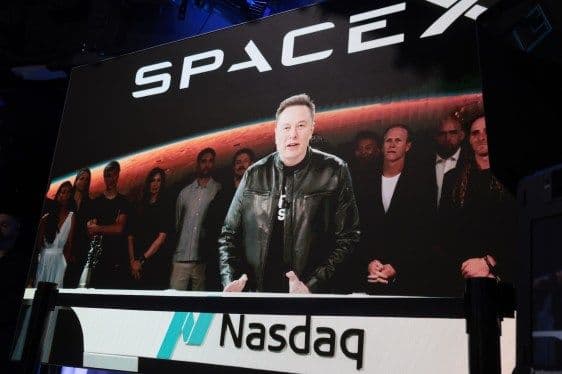
SpaceX is public: Everything you need to know post-IPO
SpaceX has captured the attention of media, investors, and the public for years now — interest propelled by the company’s reusable rocket launches and the rise of its Starlink satellite network, and, of course, for its founder and CEO Elon Musk. But in its 24-year history, nothing quite compared to its initial public offering. Everyone seemed interested — perhaps because of the sheer size of the IPO. The company priced its 555.6 million shares at $135 each to raise $75 billion, making it the largest IPO in history and turning Musk into theworld’s first trillionaire. That total raised figure would end up ballooning to $85.7 billion raised. TechCrunch has followed SpaceX’s start, struggles, and successes from the early days. And we’re here for what happens next too. Here is your go-to landing page for all the relevant SpaceX IPO news, including notable updates now that the company is public. SpaceX to acquire Cursor for $60B in stock: The deal was announced just days after the IPO. SpaceX passes Amazon as valuation balloons to $2.7T: SpaceX became the fifth-most valuable company in the world, after its stock price climbed 20% on June 15 and more than 8% in early trading Tuesday. SpaceX’s historic IPO just got supersized: The largest IPO in history grew to $85.7 billion raised. SpaceX shares opened June 12 at $150 on the Nasdaq public exchange, an 11% pop for the most anticipated debut in history. And it has continued to rise. The shares kept rising too. In midday trading, SpaceX shares soared 30%. SpaceX shares closed at$160.95, up 19%. There has been heavy trading volume, as expected. Robinhood said it has seen “record-breaking traffic” on its trading platform in the hours after SpaceX’s historic public markets debut. SpaceX COOGwynne Shotwell was interviewedby CNBC on June 12, and among the many interesting comments she made, here is one that might get the attention of Tesla shareholders: A “merger between SpaceX and Tesla might make Elon’s life a little easier.” Among the winners are the banks, which have brought in about$500 millionin total fees. The big winners are Goldman Sachs and Morgan Stanley, per the Wall Street Journal. Musk took to X, the social media company he owns, to share his appreciation of SpaceX employees as the stock rose. “I love the incredible people of SpaceX beyond words,”he wrote Friday afternoon. He also reposted a number of SpaceX IPO related posts, including a photo of insiders allwearing green shoesin what appears to be a nod to “the green shoe option.” This is a provision in an IPO underwriting agreement that lets underwriters sell up to 15% more shares than originally planned if demand is strong. To get a deeper look into what happened, and all the far-ranging implications of SpaceX now being a publicly traded company,senior reporter Sean O’KaneandAI Editor Russell Brandomsat down for a special episode of our Equity podcast, whichyou can listen to right hereor via your podcast player of choice, orqueue it up on YouTube here. With an offering this large, there is a lot of financial machinery operating behind the scenes — so the first question is when the stock will make it to the market to start trading. SpaceX is debuting on Nasdaq (see the official Nasdaq listinghere, which will have the price of record as soon as there is one). Nasdaq also has video of the SpaceX crewringing the bell, if that’s your thing. But the price is just one part of the picture. For the most up-to-the-minute information, your best bet is still financial press outlets likeBloombergandCNBC, both of which have live blogs running and will have close coverage of any hiccups that happen in getting the stock to market. Here we look at some of the bigger numbers, the consequential figures, and the eyewatering amounts that make up the company’s S-1 form. For instance, SpaceX lost $4.9 billion on revenue of over $18 billion in 2025. That’s only a fraction of the more than $37 billion lost since SpaceX’s inception. As CEO, Elon Musk holds about 85.1% of the company’s voting power. You can read more about that in the next section, “Who wins and who doesn’t” — and we’ll continue to drop interesting numbers in here. Here is another figure that caught our attention: 4,400. That’s the number of SpaceX employees who could become millionaires,according to the New York Times. Elon Musk can’t hear you over the sound of his $1.75 trillion IPO: The Equity podcast weighs in on the IPO. SpaceX is the world’s largest IPO in history and means a big payday for some investors, employees, and, of course, Elon Musk. Elon Musk becomes the world’s first trillionaire after SpaceX’s historic IPO: The SpaceX IPO has boosted Musk’s paper wealth to more than $1,000,000,000,000 at a time when he is more hated — and powerful — than ever.How Elon Musk will increase his power through the SpaceX IPO: Musk, who will have more than 50% of the voting power, will have a monarchical grip over the publicly traded version of SpaceX — control that goes far beyond what other tech founders enjoy. Who will benefit most from SpaceX IPO? Mostly Elon — and a few from his inner circle: Elon Musk has the largest stake in SpaceX by billions of shares, but others also stand to win. Here’s the rundown of who owns what. SpaceX SPV investors won’t know their true holdings until post-IPO lock-ups lift: After SpaceX makes its public debut, lower-tier SPV investors face hidden fees, lengthy payout delays, and the risk of outright fraud. The S-1 registration documentgave the world an unprecedented look inside SpaceX, including its financials and its various businesses. The S-1 continued to be amended as the IPO date approached, and we were on it. Here is what we found. The SpaceX IPO filing is filled with AI bets, Starship dreams, and Elon Musk at the center:The contents of the SpaceX IPO detail a business dominated by its Starlink satellite internet offering, more than $37 billion in losses, and future business prospects through its xAI division. Starship’s path to reusability looks murky after SpaceX’s S-1: SpaceX’s IPO and Starship rocket test flight delivered two big data points that offer a realistic vision for the coming years — and one that may disappoint both the company’s boosters and its critics. SpaceX warns investors of future dilution, adding fuel to Tesla merger rumors: The company added new language to its S-1, a warning to prospective investors that a major dilution could be in the cards after it goes public. Leading up to the IPO, SpaceX locked in a string of deals, mostly selling off compute to improve its balance sheet. Anthropic will pay xAI $1.25B per month for compute: Initial coverage of the Anthropic deal on May 20. How long is Anthropic’s lease with SpaceX? Opinions vary: Elon Musk keeps downplaying the duration of SpaceX’s contract with Anthropic. Google will pay SpaceX $920M per month for compute: A Google representative described the deal as a short-term deal addressing unexpected demand for its recently launched AI products. This article originally published at 10 a.m. ET, June 12, 2026. It has been updated with new coverage of the SpaceX IPO, share price moves, Cursor acquisition, and other related events.
View

Sixty percent of US consumers say ‘AI’ in brand messaging is a turnoff, survey finds
Getting cited by AI is easier than earning consumers’ trust, according toa new reportfrom WordPress VIP, the Automattic-owned company that offers an enterprise version of the WordPress publishing platform. As brands race to have their links appear in AI search results, consumers have grown more skeptical about whether they can actually trust the answers they’re getting. Per the report, 60% of consumers in the U.S. say that brands that use “AI” in their messaging are a turnoff, and 86% don’t fully trust AI and still want to explore original sources. Notably, 42% of consumers said that AI-generated answers without clear attribution are trusted less than airline fees, confusing privacy policies, and medical bills. Nearly three in four respondents said the internet feels “less human” than it did 10 years ago. Together, the findings paint a picture of a rapidly evolving digital landscape where brands are trying to adapt to a world beyond Google Search and traditional SEO, while also balancing the need to appear human-authored or risk losing their audience. As companies invest more in making their brand visible to AI search engines, consumers are placing greater value on transparency and attribution. “People used to build websites for other people,” said Brian Alvey, CTO of WordPress VIP, in a statement shared alongside the new report. “Now you have to build websites for AI agents acting on behalf of those people. If your site’s content isn’t legible to AI, you are invisible to a growing share of how people search. You don’t exist. And if your content doesn’t feel human and trustworthy for the tiny percentage of people who actually click past the AI answer engines, they won’t come back a second time.” The report is based on a survey of 2,000 respondents conducted in April, comprising 800 enterprise decision-makers and CMOs and 1,200 U.S. adults. Despite consumers’ wariness about AI, the report also found that AI referrals to sites were growing. Sixty percent of enterprise respondents said that traffic from AI search engines and answer platforms increased over the past year, and 74% of enterprise decision-makers said AI discoverability and attribution are a main or significant priority. WordPress VIP says the findings point to a future where brands will have to navigate both AI visibility and human trust simultaneously. The report found that 33% of consumers said clicking through to see an original source is still their top trust signal, and 80% said information on the web should remain openly accessible, rather than controlled by a small number of large organizations. The last finding aligns with Automattic’s broader push for an open web ecosystem, reflected in its backing of the open source WordPress projectandinvestmentsinopen web protocols, like ActivityPub.
View