Latest AI News

Anthropic scales Claude Mythos to critical infrastructure in 15+ countries
Anthropic is expandingProject Glasswing, its joint industry initiative to find and fix critical software vulnerabilities using AI, to about 150 new organizations across more than 15 countries, the companysaidTuesday. The news comes a day after Anthropic said it hadfiled confidentiallyfor an initial public offering, following a$65 billion fundinground at a nearly $1 trillion valuation. Anthropic’s Claude Mythos is at the heart of Project Glasswing. The AI firm dubbed the model its most powerful yet, able to identify thousands of zero-day vulnerabilities over several weeks. In early April,Anthropic gave 50 initial partners, including the U.S. government, access to Claude Mythos Preview to scan their codebases for vulnerabilities and security flaws. The expanded list of organizations with access to Mythos as of today covers power, water, healthcare, communications, and hardware — industries that weren’t “well-represented” in Anthropic’s initial cohort, the company said. Many who will now have access are companies or nonprofits that maintain codebases which other organizations and governments rely upon, Anthropic noted in the blog post. “What each partner has in common is that a successful attack on their codebase could be catastrophic,” the company said. “For most partners, we estimate that a major attack could affect more than 100 million people, with important ramifications for both global and national security.” The expanded group includes organizations in countries friendly to the U.S., including Australia, Canada, France, Germany, Italy, Switzerland, the Netherlands, Spain, Belgium, Sweden, India, Japan, New Zealand, and South Korea, according toFinancial Times, citing a person familiar with the matter. The FT also reported several organizations that have been given access to Mythos, including: U.S.-based identity and security management tool Okta; South Korean companies Samsung, SK Hynix, and SK Telecom; NATO, the U.S.-led military alliance headquartered in Brussels; and the EU’s cybersecurity agency ENISA. TechCrunch has reached out to Anthropic to confirm. Anthropic has said it expects other AI companies to soon develop models as capable as Mythos Preview, which is why the firm is racing to establish safeguards within Project Glasswing. Since releasing Mythos, rival OpenAI released its own cybersecurity-focused model GPT-5.5-Cyber, which it has rolled out to a large group of partners for testing.
View
OpenAI launches new Codex tools for white-collar work
OpenAI is getting serious about courting enterprise users. On Tuesday, the AI labreleased a new set of capabilities for Codex, meant to expand the agentic tool’s uses in the workplace. Together with the new tools, the company releasedan internal reporton how Codex is being used for knowledge work, finding its uses go far beyond software engineering. “Codex now has more than 5 million weekly active users, up more than 6x since the launch of the desktop app in February,” readsa blog post introducing the report. “While developers remain the largest user group, knowledge workers now represent about 20 percent of users and are growing more than three times as fast.” To further court those users, OpenAI released a set of six plug-ins aimed at specific jobs: data analytics, creative production, sales, product design, equity investing, and investment banking. Available fromwithin the Codex app, each of the new tools bundles integrations, instructions, and context to allow Codex to approximate a specific job. Like any AI tool, the plug-ins will grow more effective with user customization, but they’re meant to be effective tools out of the box. The new tools come after a similar push for agentic plugins from Anthropic, whichlaunched its Enterprise Agents programin February. (A more specific set of finance-oriented agentslaunched in May.) With its traditional consumer focus, OpenAI has been slower to court enterprise customers, only introducing plugin support for Codexin March. Together with the plug-ins, OpenAI introduced a new Sites feature, which allows Codex to output its work product as a hosted interactive website, instead of just a local file. As part of that system, OpenAI is partnering with Wix, Base44, Replit, Lovable, Figma, and Emergent — although the company plans to develop a larger partner ecosystem to support the service. A new Annotations feature will also allow users to designate a specific part of a document or file within Codex, allowing for more specific commands and context operations. The new enterprise features come just three weeks after OpenAI launched a new joint venture for enterprise clients, dubbedthe OpenAI Deployment Company. The venture includes more than $4 billion in funding from global investment firms, with the aim of integrating OpenAI tools more deeply into businesses around the world. “AI is becoming capable of doing increasingly meaningful work inside organizations,” OpenAI Chief Revenue Officer Denise Dresser said in a statement at launch. “The challenge now is helping companies integrate these systems into the infrastructure and workflows that power their businesses.”
View

Trump signs narrower executive order on AI oversight after industry objections
President Donald Trump signedan executive orderon Tuesday designed to give the government a chance to review powerful AI models before they are released. The order asks certain AI companies to voluntarily submit their new models to the government for testing or evaluation 30 days before releasing the products to the public. A previous draft of the order had called for a voluntary review up to 90 days in advance, though AI industry insiders had pushed for something closer to a two-week window. Trump had been slated to sign the more demanding version of the order in late May, butdelayedafter industry pushback, including from venture capitalist and former White House AI czarDavid Sacks. The president said at the time that he didn’t want to do anything to get in AI firms’ way of leading against China. “Nothing in this section shall be construed to authorize the creation of a mandatory governmental licensing, preclearance, or permitting requirement for the development, publication, release, or distribution of new AI models, including frontier models,” reads the order, published Tuesday. Trump had planned to sign the EO with a bevy of Silicon Valley’s top CEOs in attendance, but ended up signing the current version privately. In addition to the voluntary governmental AI model review, the EO directs the Department of Justice to treat crimes like AI-assisted hacking and unauthorized access as a high-priority enforcement area. This isn’t the president’s first EO on AI. Last December,Trump signed an orderdirecting the development of “one rulebook,” or a national AI policy framework, intended to preempt state AI laws.
View

Anthropic Expands Project Glasswing to 150 Organisations Across 15 Countries
The new group includes organisations from sectors such as power, water, healthcare, communications and hardware.
View

Rocket engine startup Impulse raises $500 million to hire people, not AI
Impulse Space, a startup founded by SpaceX engine guru Tom Mueller to build highly-maneuverable spacecraft, announced a $500 million Series D this week that it will use to hire as many as 200 new employees. The round, led by 137 Ventures and BANNER VC, with participation from Founders Fund, Lux Capital, and Linse Capital, reflects investor interest in space and defense tech as the U.S. government hurls cash at national security problems and SpaceX gears up for its IPO. Impulse is focused on in-space mobility. The company has developed a highly maneuverable platform called Mira that is targeted at U.S. Space Force buyers. It’s also building Helios, a vehicle designed to carry satellites rapidly to high orbits after they are dropped off in space closer to Earth. President and COO Eric Romo told TechCrunch that the new capital will help the company build and test more space vehicles and emphasized the company’s hiring plans at a time when aerospace talent is in high demand. While the company’s software teams are adopting AI coding tools, Romo said that when it comes to solving engineering problems in the real world, deep learning models aren’t quite ready for prime time. As the 13th employee at SpaceX back in 2003, Romo’s job was creating computer simulations of the company’s engine design to assess its performance. “I considered it success if I got within 20% of the right answer, because the simulations were just not that good,” Romo said. “They’ve improved, but they’ve not improved that much, and so there’s not really any substitute for designing the thing, analyzing the thing, building it, and then getting it on the test stand.” Romo suspects AI tools for hardware design may be slower to arrive because the right training data is hard to find, compared to the amount of text and code available on the internet to train LLMs. “If you want to go, say, find the best designs for a turbo pump seal package in the world, you’re not going to find those online,” he points out. Impulse started with a focus on propulsion and evolved to build spacecraft, requiring the company to add more expertise in the form of engineers who build vehicle structures and flight computers. One reason the company recently opened an office in Colorado is that aerospace talent has more options today — instead of just going to Los Angeles, engineers can find work in Seattle, Denver, or Texas. Next up for the company is another launch of its Mira spacecraft, which made its third flight late last year. That flight wasn’t without incident — a problem with its navigation system led it to expend much of its propellant early on. Romo said the company is prepping a new Mira mission that is expected to launch before the end of the year.
View

ZeroDrift raises $10M to protect AI models from themselves
As enterprises troubleshoot their AI systems, governance has emerged as a key challenge. Some are taking a dual approach: One model to handle incoming queries, and another to keep the first one from getting into trouble. That’s the premise ofZeroDrift, a new AI compliance service that on Tuesday said it had raised $10 million in a seed funding round that saw investments from a16z Speedrun, Reign Ventures, PitchDrive Ventures, and U&I Ventures, among others. The company deals entirely with the second part of the system, sitting between AI models and end users to flag and replace any messages that might present a compliance problem. It might seem strange to build an AI tool to correct other AI systems’ mistakes, but ZeroDrift says its system has a few architectural advantages over the models it will be correcting. The system is triggered by conventional programs that deterministically apply known compliance standards like SOC 2 or GDPR, and the LLM only comes into play once a message has been flagged, rewriting a compliant version of the same message. “We’re able to identify, deterministically, what are all the regulated areas, what’s the violation that’s being broken, and then we have LLMs that can do the rewrites,” CEO Kumesh Aroomoogan says. Critically, the company says its entire system can be run with lower latency and more reliability than a conventional LLM. This is what ZeroDrift touts as its primary advantage over big labs like OpenAI and Anthropic, which are often already present in the underlying system. The most obvious use case is for AI chatbots, which are already deployed in front of consumers where there can be serious consequences for rogue answers. But Aroomoogan sees a much larger total addressable market, potentially spanning AI-generated messages that are generated only within automated systems that humans will never see. So far, it’s a relatively small market, but it’s one that will grow as AI proliferates. If the fundraise is any indication, there’s a lot of pent-up demand for such products. “It was probably the fastest fundraising I’ve done in my life,” Aroomoogan says, crediting Andressen Horowitz for helping structure the seed round. “We closed within three weeks, and we will be oversubscribed by 3x on the amount.”
View

Cricketer KL Rahul Partners With str8bat to Launch AI-Powered Batting Platform
The partnership brings KL Rahul’s batting philosophy to str8bat’s AI platform allowing players to learn from professional-level insights tailored to their game.
View

Coforge Launches Nexa Agentic Platform for Insurers
Nexa aims to automate and streamline underwriting, claims processing, product development and modernisation of legacy systems.
View

The Emergence of New Creator Class in India
The government's new AI scholarship programme will depend on how effectively it teaches creators to work alongside rapidly evolving AI systems.
View
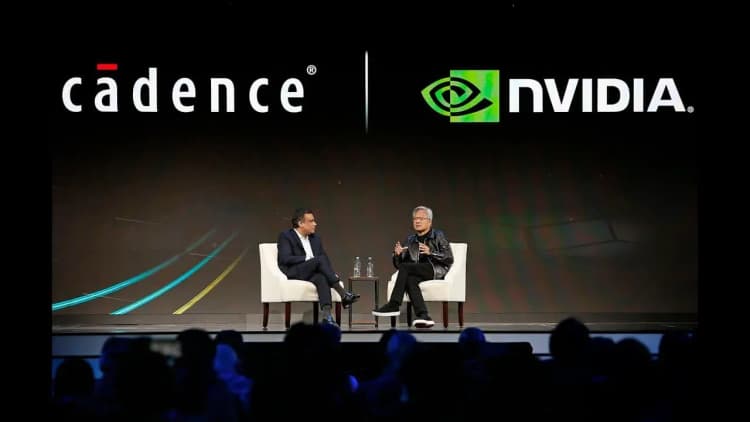
Cadence Launches Autonomous AI Engineer for Chip Design
Cadence said the AI agent can cut semiconductor verification cycles from five weeks to less than a day.
View

Cars24 Launches Dedicated AI Labs With $20 Million to Back Tech Founders
Pre-owned car platform Cars24 has launched "AI Labs" with a $20 million investment. Partnering with OpenAI, AWS, and ElevenLabs, the initiative will build in-house AI-native products and fund early-stage startups building transformative technologies.
View

AirTrunk Plans ₹2 Lakh Crore Data Centre Investment in Maharashtra
The project will be developed at the Raigad Pen Growth Centre, also referred to as Orange City.
View