Latest AI News

Practo's AI Journey Took 18 Years. Now, 60% of Its Code is AI-Generated
Practo has been experimenting with machine learning since 2014–15, beginning with search and doctor recommendation systems.
View
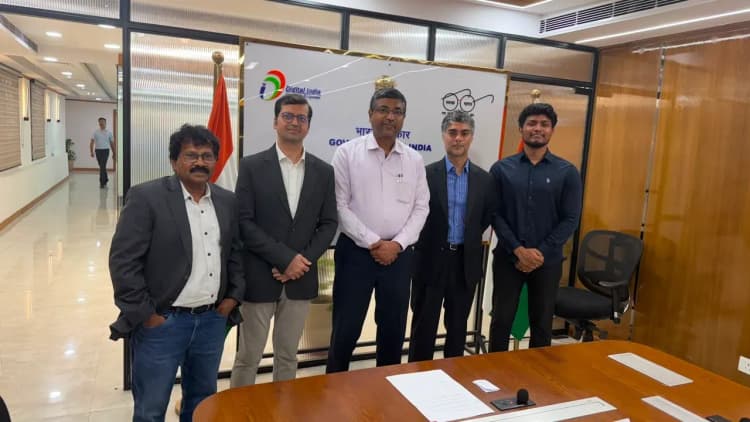
Eros Unveils LCVM and Persona AI to Power Multilingual Storytelling
The new AI ecosystem moves beyond traditional language models by incorporating cultural intelligence, multilingual voice generation, and AI-powered digital personas.
View
ChatGPT Gets Lockdown Mode to Protect Users From Prompt Injection Attacks, Reduce Data Theft Risks
OpenAI has announced a new security feature for ChatGPT to safeguard users and organisations from prompt injection attacks. Dubbed Lockdown Mode, it is an optional setting within the AI chatbot that is claimed to protect sensitive user data from being exposed. As per the company, it is available across all ChatGPT account types and workspaces, including personal, business, and enterprise accounts. Lockdown Mode restricts several ChatGPT capabilities that rely on internet access or external services when enabled.
View
Data Centres Are Coming to Your Desk
The industry’s answer to rising AI costs is bringing more compute closer to the edge.
View

Is this the dawn of the Tokenpocalypse?
Microsoft recently announcedmajor pricing changes for GitHub Copilot— changes that were drastic enough that a Reddit user said their company hasstarted calling it the Tokenpocalypse. On the latest episode ofTechCrunch’s Equity podcast, Kirsten Korosec, Sean O’Kane, and I discussed what those changes might mean for the larger AI ecosystem. After all, as Anthropic and other big AI companies plan to go public, leading toawkward questions about profitability, we’re likely to see similar price increases for other AI products, and more usage restrictions asbusinesses try to keep costs under control. “Can these AI labs collapse that cost [and] progress the tech enough in a way that it eventually meets in the middle with customers’ appetite for spending?” Sean wondered. Kirsten, meanwhile, suggested that this also reflects “how quickly things are moving.” In just a few months, companiesbecame obsessed with “tokenmaxxxing,”then turned against it due to the high costs. So as AI companies write their IPO filings, she asked, “How do you even write these risks in, because they are evolving before our eyes?” Keep reading for a preview of our conversation, edited for length and clarity. Anthony Ha:When we were planning for this, Sean, you called this the Tokenpocalypse. And I want to hear more about what you think about it, but there was an example of Microsoft deciding with GitHub Copilot that they’re going to startcharging more per token[instead of a flat rate]. This whole ecosystem is heavily, heavily subsidized by investor money. And so stuff that seems like it has no cost is, in fact, incredibly expensive. And now we’re going to get to a point where more of that cost is going to get passed on to the end consumer, to the customer. How is that going to change behavior? I don’t think we know, but there’s going to be a lot of pain. Sean O’Kane:I mean, how many token-related risk factors do we think are going to be in the Anthropic’s S-1? This is a big question. It’s something that I’ve mentioned a lot on this show and we seem to just keep running into it, whereUber has done like the full arcin the span of a month and a half of saying, “Boy, we kind of blew through our budget on this stuff way quicker than we thought this year.” And then, “Ooh, maybe this is going to be a little too expensive, we need to put caps on this, and we need to limit people’s usage inside the company.” That’s just a little worrying. Imagine if you see that happen so quickly at a company like Uber, that is using this stuff a lot, and it’s just a question of: Can these AI labs collapse that cost [and] progress the tech enough in a way that it eventually meets in the middle with customers’ appetite for spending? A funny thing to think back on is, I don’t think there was really any strategy involved in charging $20 a month [for ChatGPT Plus] when ChatGPT originally came out. It was just sort of like, “Let’s spit out a number.” And we’ve all been reckoning with that ever since. Clearly, people pay more for the more advanced models, but even that still isn’t enough to close that gap to the true cost. So that’s clearly the biggest question here. Kirsten:All of this, to me, illustrates how quickly things are moving. I mean, when you really think about it, the whole tokenmaxxxing thing has become a thing, peaked, and now is seen disfavorably, within six months. The scale of this, the whole pricing mechanism, to your point, was put in place before business models were really shaped and solidified around AI labs. And then, at the same time, you have the government trying to catch up. Also this week,President Trump signed an executive order— it is a narrow version, but this is designed to give the government a chance to review powerful AI models. So you have all this happening at a pace that I don’t think I’ve ever experienced. That’s why I’m really looking forward to some of these S-1 IPO registration statements, because of the risk [factors]. How do you even write these risks in, because they are evolving before our eyes, and day by day? Anthony:Uber is an interesting example, Sean, because you mentioned their AI spend, but they’ve also come up in the AI discourse because sometimes, people who think there’s this bubble, they’ll bring up just how wildly unprofitable these tools are, these companies are, and then people will bring up Uber as a response. People talked about how unprofitable Uber was, but eventually you get to scale and then you close that gap. And I think that’s true. But also, for Uber to do that, it had to really transform itself as a company in a lot of ways. What Uber was at the beginning and what it is now, all the different areas of business that it’s had to expand into, the different ways that customers and drivers have gotten squeezed, those are things that had to happen to get to the point where it could be a profitable company. And I think you’re going to have to see similar transformations for a lot of these AI companies if they’re going to survive. Sean:Is there any way that these labs can squeeze pennies like Uber has squeezed the drivers over the years? Is there something squishy enough there for them to do that? I don’t know. This seems like harder, more straightforward costs in a lot of ways, so it’ll be interesting.
View
OpenAI is still working on that ‘super app’
OpenAI plans to roll out a revamped version of ChatGPT in the coming weeks — one that will serve as a “super app” with coding tools and AI agents,according to the Financial Times. The company’s goal is reportedly to become more competitive with Anthropic, particularly among business customers, and to get closer to profitability before an IPO. That means turning ChatGPT into a gateway leading free users to products they might actually pay for, such as coding product Codex. In fact, the FT quotes one senior OpenAI employee as declaring, “Chat is dead.” Thibault Sottiaux, who leads OpenAI’s core product and platform, said the company is working towards a product “where you have your own personal agent that is capable of helping you … across everything in your life, be it personally or at work.” If this sounds familiar, it’s because there have beenreports about OpenAI’s super app ambitionssince last year. In March, The Wall Street Journal reported that these plansrepresent a major strategy shiftfor the company after launching a variety of standalone products in 2025; OpenAI executives now saythey’re abandoning “side quests” likevideo generator Sora.
View
Notion restores access to Anthropic after service disruption
Notion’s integration with Anthropic apparently had a hiccup this weekend. Early Sunday morning, the companyposted, “Anthropic’s Opus 4.7 and 4.8 models are experiencing degraded performance, which is causing a higher rate of failures for users selecting these models in Notion AI.” As a result, Notion said it was disabling use of “all Anthropic models” in its automated productivity tool. Twelve hours later, Notion’s head of product Max Schoeningwrotethat he was “astonished” at “the amount of people RT-ing this because they want a story around model quality to be the reason.” (According to the public stats on X, Notion’s post has been reposted around 1,200 times.) “The degraded performance was a temporary service disruption,” Schoening said. “This happens. It happens to Notion, GitHub, AWS, your OpenClaw, and everything in between.” He added that Notion has restored access to Anthropic’s models. Meanwhile, an Anthropic spokesperson said in a statement, “A brief infrastructure issue caused elevated errors on multiple Claude models for a short period of time. The issue has since been resolved. We’re grateful to our users for their patience while we worked to restore service.”
View

Why Forecasting India's Weather Is One of AI's Hardest Challenges
As heat waves scorch the country and monsoons confound forecasters, a research organisation is working with India's meteorological establishment to bring hyperlocal, AI-powered weather intelligence to every neighbourhood.
View

What to expect from WWDC 2026: Siri’s highly anticipated revamp and Apple Intelligence updates
As Apple’s Worldwide Developers Conference, WWDC 2026, approaches, the excitement is building around what Apple has in store for us this year. From Siri’s overhaul to new Apple Intelligence updates, there’s a lot to look forward to. The annual Worldwide Developers Conference kicks off Monday at 10 a.m. PT/1 p.m. ET. For those eager to tune in, the event will be streamed live via theApple Developer app,Apple’s website, and the Apple DeveloperYouTube channel. The most anticipated announcement is a major AI upgrade to Siri, transforming it into a more conversational assistant capable of understanding context, handling multi-step tasks, and interacting more naturally across apps and services. The revamped Siri will leverageGoogle’s Gemini technologyto enhance its capabilities. Additionally, recent leaks from Bloomberg have unveiled astandalone Siri appthat aims to compete with advanced AI chatbots like ChatGPT, Claude, and Gemini. Apple may also introduce a feature reminiscent of messaging apps, enabling users to set timers forautomatically deleting conversationsafter 30 days, a year, or keeping them indefinitely. According toThe Information, Apple plans to introduce an AI agent integration with the app store. While details are scarce, agents allow users to delegate tasks such as booking reservations, managing everyday tasks, editing documents, or controlling smart home devices. A new “Visual Intelligence” section isanticipatedto be introduced within the Camera app, taking the place of the previous Visual Intelligence feature found in the Camera Control button. This upgrade will introduce a dedicated Siri mode that exists next to options like Photo, Video, Portrait, and Panorama. The Visual Intelligence feature leverages Google Image Search to accurately identify objects captured by the user. In addition, the Photos app is set to receive exciting enhancements powered by Apple Intelligence. These may include intelligent scene recommendations for optimizing photos, automatic object removal for cleaner images, and an innovative AI photo editing feature that allows users to request edits simply by using natural language, new productivity functionalities in visionOS. Apple is set to upgrade the Image Playground app, introducing higher-quality image generation, more artistic styles, better character consistency, and richer editing controls. The interface for creating new images will be simplified, offering fewer controls and a “describe a change” option for editing. Additionally, we might see a suggested Genmoji feature that proposes custom emojis based on users’ media and text interactions. Users may also be able to generate AI wallpapers that reflect various themes and moods. Notable updates are rumored to be coming to the Wallet app, particularly a new bill-splitting feature that will simplify sharing expenses among friends or family. Users will be able to photograph a receipt and generate payment requests to different parties effortlessly. Alongside this, the Wallet app will also include a “Create a Pass” option that enables users to generate digital passes from physical items such as movie tickets, concert passes, or gym membership cards. Apple is expected to enhance its AI-powered Siri experience across its devices, as well as likely incorporate more AI features and stability updates.
View
OpenAI unveils Lockdown Mode to protect sensitive data from prompt injection attacks
OpenAIannounceda new feature that it says will provide additional protection from prompt injection attacks, where malicious chatbot instructions are hidden in webpages and other content sources. Among other things, Lockdown Mode will disable live web browsing (so you can only access cached content), the retrieval and display of images from the web (you can still generate images), deep research, and agent mode. The company says that even with Lockdown Mode turned on, ChatGPT could still be vulnerable to prompt injections — which could, for example, “appear in cached web content or in an uploaded file, and could still affect the behavior or accuracy of a response.” But the goal is to reduce the likelihood that sensitive data gets shared in the process. “Lockdown Mode isnotintended for everyone,” OpenAI says. “It is designed for people and organizations that handle sensitive data and want stricter protection from data exfiltration risks related to prompt injection.” The company says it’s currently rolling Lockdown Mode out to self-serve ChatGPT Business accounts, as well as eligible personal accounts.
View

The Trump administration might take an equity stake in OpenAI
President Donald Trump said on Friday that he’s spoken to AI companies about striking deals “where the American people can benefit from the success of AI.” Trump does not seem to have mentioned specific companies in his comments, but OpenAI is a likely candidate, especially after CNBC reported thatthe Trump administration has indeed been discussing an equity stakewith the AI company. CNBC said some of that equity could be used to seed a “Public Wealth Fund”recently proposed by OpenAI. As outlined by the company, proceeds from the fund “could be distributed directly to citizens, allowing more people to participate directly in the upside of AI-driven growth, regardless of their starting wealth or access to capital.” According to Bloomberg, when reporters on Air Force Oneasked Trump about the idea, he replied that he’s been talking to AI executives about “concepts where pieces could be given to the American public, where the American public essentially becomes a partner with the companies.” Bloomberg also reports that CEO Sam Altman has been discussing the idea of a government stake in major AI companies since early 2025. This seems to align with Trump’s broader interest in government ownership of for-profit companies — most notably, withthe government taking a 10% stakein struggling chipmaker Intel last year. The idea has also found some traction on the left, with Senator Bernie Sanders this weekproposing a one-time, 50% taxthat companies like OpenAI, Anthropic, and xAI (which ispart of SpaceX) would pay in the form of stock. With all of those businesses potentially going public this year, Sanders argued this tax would “give the public a direct role in determining the future of this technology” and “guarantee that the trillions of dollars potentially generated by A.I. are used to improve the lives of all of us.” David Sacks, an investor and podcaster who recentlystepped down from his role as Trump’s AI and crypto czar, posted that he cansee why Sanders’ idea resonates, “including with many on the right,” but warned it would actually “accelerate the corporate-government fusion we’re already sliding toward.” (Sacks now co-chairs the President’s Council of Advisors on Science and Technology.) Elsewhere on social media, former Microsoft employee Dare Obasanjosuggested, “The groundwork is already being laid for a government bailout of OpenAI.”
View
Sriram Krishnan is leaving his role as White House AI advisor
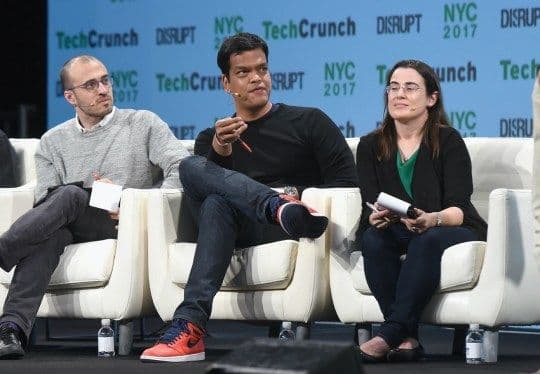
Former tech executive and VC Sriram Krishnan is leaving the Trump administration at the end of June. “It is hard to express how big a privilege it has been to serve the American people and how grateful I am to have had the opportunity to do so,” Krishnan said ina post on X. “First and foremost, it has been an honor to serve under President [Donald Trump]. Without his leadership, we would not be leading in the AI race.” Krishnan, who’s been serving asa senior policy advisoron artificial intelligence at the White House, was one of a number of tech industry figures totake roles in the second Trump administration. Krishnan has led product teams at Microsoft, Twitter, Yahoo, Facebook, and Snap, and he was most recently a partner at Andreessen Horowitz, a firm whose foundersthrew their support behind Trumpduring the 2024 election. In his post, Krishnan highlighted some “key public accomplishments,” starting with the administration’s AI Action Plan, which prioritized data center construction over regulation and safety. Since then, Trump has signed several executive orders around AI, including one thatseeks to challenge state-level AI regulationsand another focused on oversight that wasdelayed and narrowed after industry pushback. Trump has also endorsed the idea thatthe government could take an equity stake in major AI companies. Krishnan noted that the person he “worked [most] closely with over the last 18 months” was David Sacks, the investor and podcaster whostepped down as AI and crypto czarearlier this year and became co-chair of the President’s Council of Advisors on Science and Technology. “[Sacks’] continuing advocacy for America winning on AI has been and continues to be crucial,” Krishnan said. Next, Krishnan said he will be “building institutions” that tackle big challenges for “America and its allies.”According to The Washington Post, he’s planning to start an outside institution that will still give him a role in influencing Trump’s AI policy. “Whether it is energy, data centers or a clear path for Americans to experience the benefits of AI, there are many tough issues we all need to navigate together,” Krishnan said.
View